Marcus Deveraux had spent thirty-one years appraising other people’s treasures. As a senior antiquities assessor for a Charleston auction house, he could spot a forged signature from across a crowded room. He was fifty-eight, twice divorced, and comfortable in his solitude—or so he told himself. His flaw was a quiet arrogance, the belief that he had seen everything worth seeing.
Then came the Whitfield estate sale.

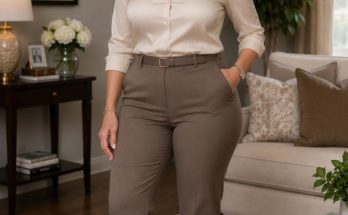
The house sat on a marsh-edged lot south of the city, all heart-pine floors and salt-bleached shutters. Marcus arrived early, clipboard in hand, expecting the usual: dusty silver, water-stained lithographs, maybe a decent Federal-era sideboard. The widow, a woman named Corinne Whitfield, met him at the door. She was perhaps fifty, with silver-streaked hair pinned loosely and eyes the color of strong tea. She wore a linen shirt with the sleeves rolled to her elbows, and there was a smear of garden soil on her forearm.
“You’re the appraiser,” she said. Not a question.
“Marcus Deveraux.”
“I know.” She stepped aside. “Mind the cat.”
He minded the cat. He also minded the way she stood just a fraction too close when she pointed out the dining set, close enough that he caught the scent of cedar and something citrus. His neck prickled. He wrote “mahogany, c. 1820” and tried not to notice the fine lines at the corners of her mouth.
The conflict began in the study. Corinne pulled a framed sketch from behind a bookcase—a small, intimate drawing of a woman bathing, signed in a hand Marcus recognized instantly. It was a lost Whistler. Worth six figures, maybe more.
“My late husband bought it at a flea market,” she said. “He thought it was a reproduction.”
Marcus examined the paper, the watermark, the faint foxing. His pulse kicked. “It’s not.”
She leaned in to look, her shoulder brushing his. The contact was brief, accidental, and it burned through his shirt like a match head. He stepped back too quickly and knocked a stack of books off the desk. They both knelt to gather them, and for a moment their hands met on the same leather spine. Her fingers were warm, her nails short and unpolished.
“Sorry,” he said, voice rougher than he intended.
“Don’t be.” She didn’t pull her hand away. Her eyes held his, steady and amused. “You’re very serious about books.”
“I’m serious about most things.”
“That must be exhausting.”
He laughed—actually laughed—and felt the sound surprise them both. They stood. The air in the study had gone thick. Marcus was acutely aware of his own heartbeat and the way Corinne’s breath lifted the linen at her collarbone.
The climax came two days later, when he returned to finalize the inventory. A summer storm had knocked out the power. Corinne lit candles. They sat on the porch while rain hammered the tin roof, and she told him about her husband—a kind man, she said, but distant, a man who collected beautiful things and never touched them. Marcus confessed his own failures: the marriages that dissolved because he was better at examining objects than people.
“You touch things carefully,” she said. “I’ve watched you.”
“It’s my job.”
“It’s more than that.” She reached over and straightened his collar, her knuckles grazing his jaw. The gesture was so simple, so deliberate, that his throat closed. He could smell the rain and the candle smoke and her. Every instinct told him to retreat, to catalog this as a complication and file it away. But his hand found hers on the armrest, and he held it.
“I’m not good at this,” he said.
“Neither am I.” Her smile was crooked. “We can be bad at it together.”
The resolution was quiet. The Whistler sold at auction for a sum that made the local paper. Marcus resigned from the appraisal, citing a conflict of interest. He moved his few good pieces into Corinne’s house on the marsh, and on a Tuesday in October, they sat on the same porch with two glasses of bourbon and watched the tide come in.
She rested her head against his shoulder. He didn’t flinch.
“You’re still serious,” she murmured.
“About most things.” He turned his head and kissed her temple, and the rain began again, soft this time, tapping the roof like patient fingers.