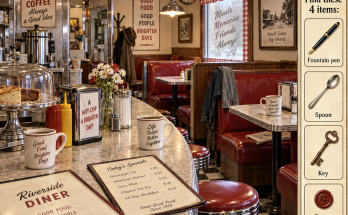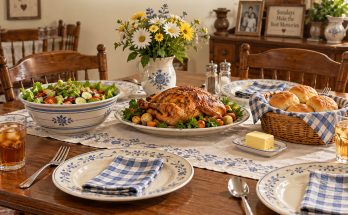
The restaurant was the kind of place that doesn’t put prices on the menu—a quiet signal that if you have to ask, you can’t afford it. Soft lighting, white tablecloths, the gentle clink of crystal against crystal. The kind of place where men bring women they want to impress, and women pretend not to notice how hard the men are trying.
Catherine had been to a hundred restaurants like this. Maybe more. She was fifty-one, divorced twice, and had learned long ago that the best way to survive a date was to treat it like anthropology—observe, catalog, resist the urge to intervene.
David was forty-five. A colleague of her brother’s, suggested over Thanksgiving when Catherine had made the mistake of mentioning she was “seeing people again.” He was nice enough. Successful. Recently divorced himself, carrying that particular brand of confused loneliness that made men in their forties both eager and terrified.
He’d talked about his work for twenty minutes. Then his divorce for fifteen. Then—mercifully—he’d asked about her.
Catherine gave him the edited version. The career highlights. The travel stories. The careful impression of a woman who had her life together because she did, mostly, except for the parts she didn’t share with strangers.
But here’s the thing about Catherine: she was bored.
Not with David specifically. With all of it. The performance of dating, the careful dance of revelation and concealment, the way men looked at her like she was a puzzle they needed to solve rather than a person they might want to know.
She was tired of being good. Tired of being nice. Tired of sitting across from men who thought dinner was the destination when she was hungry for something else entirely.
And somewhere between the second glass of wine and the arrival of their entrées, Catherine decided.
She wasn’t going to fake interest anymore. Wasn’t going to laugh at jokes that weren’t funny or pretend his stories were fascinating. She was going to find out, once and for all, if David was capable of reading the room—or if he was just another man who needed everything spelled out in neon.
So she used the trick.
It wasn’t something she’d learned from a magazine or a friend. It was something she’d discovered by accident, years ago, in the early days of her first marriage when she was still trying to get her husband’s attention and he was still pretending not to understand.
The trick was simple. Almost stupidly so. But it worked—when it worked—because it separated men who were paying attention from men who were just waiting for their turn.
Catherine waited until David was mid-sentence, talking about his son’s little league team or something equally uninteresting to anyone who wasn’t the father. She reached for her wine glass—slowly, deliberately—and let her hand brush his.
Not a grab. Not a lingering touch. Just the briefest contact, the back of her fingers against the back of his, as she lifted her glass.
Then she held his gaze. For one second. Two. Long enough that he couldn’t pretend it was an accident.
And then—this was the important part—she didn’t apologize. Didn’t blush or stammer or make a joke about being clumsy. She just took a sip of her wine, set the glass down, and waited.
Most men missed it. They kept talking, oblivious, their minds still running on the script they’d prepared. Catherine would finish dinner, decline dessert, and go home to her empty apartment wondering why she kept trying.
But David—
David stopped mid-sentence.
His eyes, which had been wandering around the restaurant while he talked, snapped back to her face. Really looked at her, maybe for the first time all evening.
“Sorry,” he said. “What was I saying?”
“Something about baseball.”
“Right.” He paused. His hand, the one she’d touched, rested on the tablecloth between them. Not pulling away. Not advancing. Just… present. “I was boring you.”
It wasn’t a question. Catherine appreciated that.
“A little,” she admitted.
He laughed. Actually laughed, surprised by her honesty. “Most women just pretend to listen.”
“I’m not most women.”
“No,” he said, his voice dropping slightly. “You really aren’t.”
The shift was subtle but immediate. David stopped performing and started paying attention. He asked questions that mattered. He listened to answers without planning his response. He noticed things—the way her finger traced the rim of her glass, the way she leaned forward when he said something that actually interested her, the way her eyes kept dropping to his mouth when he talked.
Catherine felt something unwind in her chest. Something she hadn’t realized was tight.
He could read signals.
That was rare. That was… promising.
The trick, you see, wasn’t really about the touch. The touch was just a test—a way to see if he was present enough to notice, confident enough to acknowledge it, respectful enough not to immediately make it about him.
Men who grabbed, who took the touch as permission to escalate, who suddenly started treating her like a conquest—they failed.
Men who pulled back, who got nervous, who started apologizing for things they hadn’t done—they failed too, though more gently.
But men who paused. Who recognized the signal for what it was—an invitation to be more present, more honest, more awake—they passed. And those men, the ones who could read the room, who understood that communication wasn’t just words… those men were worth the effort.
“Tell me something real,” Catherine said, leaning her elbows on the table, closing the distance between them.
“Real?”
“Something you don’t tell people on first dates.”
David considered. He had kind eyes, Catherine noticed. The kind that crinkled at the corners when he smiled, suggesting he laughed easily and often.
“I’m terrified of being alone,” he said finally. “Not lonely—I’m used to lonely. But alone. Permanently. The idea that this is it, that I’ll just… keep doing this, first dates and small talk and nothing that matters, until I’m too old to care anymore.”
Catherine felt the honesty of it land in her chest like a stone dropped in water. Ripples spreading outward.
“That’s real,” she said.
“Your turn.”
She thought about deflecting. About giving him something safe, something that sounded vulnerable without actually risking anything. But he’d been honest. And he’d passed her test.
“I don’t know if I believe in love anymore,” she said. “Not the romantic kind. I believe in compatibility, in convenience, in finding someone who doesn’t make you miserable. But the other thing—the thing that makes your heart race and your hands shake—I think maybe that’s for younger women who don’t know better.”
David was quiet for a long moment. Then: “And yet you’re here. Still trying.”
“Habit,” she said, but her voice lacked conviction.
“Or hope,” he suggested gently.
They finished dinner. Declined dessert. David paid—the restaurant was his choice, his invitation—and Catherine let him because she was old enough to know that generosity wasn’t always about obligation.
Outside, the night was cool, autumn turning to winter. Catherine’s apartment was three blocks away. She’d walked, enjoying the city lights, the feeling of being anonymous in a crowd.
“Can I walk you home?” David asked.
She considered. The date had been… surprisingly good. Once he’d stopped performing. Once she’d given him permission to be real.
“It’s three blocks,” she said.
“I know. But I’d like to.”
Catherine smiled. “Alright.”
They walked in comfortable silence at first. The city sounds around them—traffic, distant laughter, the hum of a thousand lives being lived in parallel.
“The thing you did,” David said as they crossed the second block. “At dinner. The… touch.”
Catherine felt her pulse quicken. “What about it?”
“Was that a test?”
She could lie. Could pretend it was accidental, could laugh it off. But she’d already decided to be done with pretending.
“Yes,” she said.
“Did I pass?”
“You stopped talking about baseball.”
He laughed, the sound warm in the cool night air. “Fair. But I meant—”
“I know what you meant.” Catherine stopped walking. Turned to face him. They were in front of her building now, the doorman visible through the glass, giving them privacy without quite looking away. “Yes, David. You passed.”
He stepped closer. Not crowding her—never crowding—but close enough that she could smell his cologne, something woody and subtle.
“What happens now?” he asked.
Catherine looked at him—really looked—and felt something she hadn’t expected. Not fireworks, not the desperate hunger of her twenties. Something quieter. Something that felt like the first warm day after a long winter.
Possibility.
“Now,” she said, reaching into her purse for her keys, “you have a choice.”
“Tell me.”
“You can kiss me goodnight here, on the street, like a gentleman. And I’ll give you my number, and we’ll have a second date, and maybe a third, and we’ll see where this goes.”
“Or?”
She held his gaze. Let the silence stretch. Let him feel the weight of what she was offering.
“Or you can come upstairs.”
David didn’t move. Didn’t rush. Just looked at her with an expression she couldn’t quite read—surprise, desire, something that might have been respect.
“That’s a big leap,” he said quietly. “From dinner to…”
“To what?” Catherine asked. “Intimacy? Vulnerability? The thing we’ve both been avoiding?”
“I was going to say ‘your bedroom,’ but sure, those work too.”
She laughed. Couldn’t help it. He was funny, when he wasn’t trying to be impressive.
“I’m not asking you to marry me, David. I’m asking if you want to stop performing for one night. If you want to be… real. With me.”
He took her hand. His fingers were warm, slightly calloused—he mentioned something about woodworking, she remembered, a hobby he’d picked up after the divorce.
“I’m scared,” he admitted.
“Good. So am I.”
“What if it’s terrible?”
“Then we’ll have a funny story for our therapists.”
He smiled, but his eyes were serious. “And if it’s not terrible? If it’s… good?”
Catherine squeezed his hand. “Then we’ll have something else entirely.”
They went upstairs.
Not because Catherine was easy, or desperate, or any of the other labels men put on women who know what they want. But because she was tired of waiting. Tired of following rules that had never served her. Tired of pretending that desire was something that had to be earned over three dates and a dinner bill.
And because David had proven something rare and valuable: he could read the room. He could see past her performance to the person underneath. He could meet her honesty with his own.
The apartment was neat, curated, the home of a woman who’d learned to make spaces beautiful because she’d spent so much time alone in them. David looked around, not judging, just… seeing her. The books on the shelves. The art on the walls. The photograph of her younger self, laughing, that she’d never taken down because it reminded her that she used to be brave.
“Wine?” she asked, already moving toward the kitchen.
“Water, actually. If you have it.”
She turned, surprised.
“I want to remember this,” he explained. “All of it. And I’m a lightweight after three glasses of red.”
Catherine felt something shift in her chest. He wanted to remember. Not just the sex—them. This moment. Whatever it became.
She got him water. Got wine for herself, because she needed the warmth. And then she did something she’d never done before on a first date—something that would have scandalized her mother and confused her younger self.
She took his hand and led him to the bedroom.
The rest—the details, the specifics, the way he touched her like she was precious and necessary and real—that belonged to them. Private. Sacred, in its own way.
But the lesson, the thing that matters, is this:
Catherine used her trick. The restaurant trick. The small touch, the held gaze, the invitation to pay attention.
And David—David was brave enough to accept it.
Not every man would have. Not every man could. Most would have missed it entirely, or misread it, or been too afraid of getting it wrong to try.
But the ones who see it? Who recognize the signal for what it is—a request for presence, for honesty, for the courage to stop performing and start connecting?
Those men are worth the risk.
Catherine woke up the next morning with David’s arm around her waist, his breathing steady against her neck, and the unfamiliar sensation of hope.
Not certainty. Not even confidence, really. But possibility. The sense that maybe, just maybe, the best parts of her life weren’t behind her after all.
She’d used the trick. He’d passed the test. And somewhere between dinner and dawn, they’d found something that felt like the start of everything.
The restaurant trick isn’t about manipulation. It’s not a game or a power play or a way to trap unsuspecting men.
It’s a filter. A way for women who know what they want to find men who are capable of giving it.
The touch says: I’m here. I’m interested. But you have to meet me halfway.
The gaze says: I’m paying attention. Are you?
And the silence—the beautiful, terrifying silence that follows—says everything else.
David met her halfway. He paid attention. And in the space between one breath and the next, they both decided to be brave.
That’s the real trick, it turns out. Not the touch, not the gaze, not the carefully timed silence.
The trick is being willing to try. Being open to possibility. Being brave enough to want something, even when you’re not sure you deserve it.
Catherine and David are still together. Six months now. Long enough that she’s stopped counting, stopped testing, stopped waiting for the other shoe to drop.
Long enough that the restaurant trick has become something else entirely—a private language, a shared joke, a reminder of the night they both decided to stop performing and start living.
Sometimes, on date nights, she’ll reach across the table and touch his hand. Just for a second. Just to say I’m still here. I still choose this. I still choose you.
And David—David always meets her gaze. Always smiles. Always knows exactly what she’s saying without her having to say a word.
That’s the magic of it. That’s why it works.
Not because of the trick itself, but because of what it finds. What it reveals. The connection that was always possible, waiting for two people brave enough to make it real.