Clay Bennett, 58, retired high school woodshop teacher, has not made a single impulsive choice in the 21 years since his wife Karen left him for the engineering coach she’d been volunteering with at the regional robotics competition. He runs the same three-mile route every morning, buys the same black coffee at the same BP station every Tuesday and Thursday, and spends every August manning the woodworking booth at the Allendale Street Fair, selling hand-cut maple cutting boards and cedar birdhouses to tourists and nosy neighbors alike. The work is predictable, quiet, no surprises. That’s how he likes it.
He’s wiping sawdust off the edge of his scuffed folding table at 8:30 PM, the last of the fair crowd drifting toward the beer tent where a cover band is slurring their way through a 1990s Alan Jackson cut, when Mara walks up. She’s Karen’s niece, 46, moved back to town six months prior to run the public library after the previous librarian retired to Florida. Clay made her a custom oak book press for the library’s rare book collection back in May, refused to take her money when she tried to Venmo him three times. She’s holding two cold IPAs, condensation beading down the sides of the dented cans, and she holds one out to him before he can say hello.

He hesitates. The town’s gossip mill runs faster than the high school cross country team, and he knows half the people at the beer tent already have their eyes on them. He’s “Karen’s ex” to half the town, Mara is “Karen’s niece who moved back from Chicago”, and the unspoken line between them is thick enough to cut with a table saw. But the beer is cold, his feet are sore from standing 12 hours on cracked asphalt, and he hasn’t talked to anyone who doesn’t ask him about birdhouse prices all day. He takes the can. His fingers brush hers when he grabs it, and he notices her hands are calloused too, rough around the fingertips from prying apart old book spines and sanding down the edges of the vintage library card catalogs she’s been restoring. He takes a long sip, the beer bright with citrus and cold enough to make his teeth ache.
She leans against the edge of his table, her shoulder pressing light against his bicep through the worn gray flannel he threw on when the sun started to dip. She’s wearing frayed cutoffs and a faded Tom Petty tee, a smudge of blue cotton candy stuck to the edge of her jaw, her sunbleached blonde hair pulled back in a messy bun held together with what looks like a broken plastic ruler. She laughs at his story about the 12-year-old who tried to carve a swear word into the side of a pine birdhouse earlier that day, snorting a little when he imitates the kid’s panicked face when he got caught, and her knee knocks against his when she shifts her weight. He can smell coconut sunscreen and the faint cherry tang of the vape she keeps tucked in her back pocket, and for half a second he forgets he’s supposed to feel guilty for noticing how the small gold hoop in her left ear catches the last of the pink sunset.
The conflict hits him square in the chest a minute later, when she mentions she found a stack of 1970s woodworking magazines in her grandma’s attic, the exact ones he used to check out from the library when he was a kid just learning to use a lathe. She says she’s got the family cabin out on Maple Lake for the weekend, her mom was supposed to come visit but bailed with a sinus infection, and she’s got a cooler of grass-fed burgers and a charcoal grill that’s already lit. He thinks about the group of retired teachers he’s supposed to meet for hot wings at the dive bar down the street in 45 minutes, thinks about Karen’s weekly book club that meets two blocks from the fairgrounds, thinks about the old lady from his church who’s already staring at them from the beer tent, her phone held low like she’s typing a text to her group chat. For a second he’s disgusted with himself, the voice in his head screaming that this is wrong, that he’s too old for this kind of foolishness, that people will talk, that she’s family for Christ’s sake, even if it’s only by a marriage that ended two decades ago. But then she looks up at him, her eyes dark and warm, and he realizes he hasn’t felt this light, this curious, this alive, since before Karen told him she was leaving.
He nods before he can talk himself out of it. He shoves the last of the unsold birdhouses into the back of her beat-up Subaru Outback, his hand brushing hers again when they both reach for the same stack of wrapped cutting boards, and neither of them pulls away. He leaves his own pickup parked in the fairgrounds lot, figures he can come get it tomorrow, and slides into the passenger seat of her car. The windows are rolled down, the smell of pine and lake water drifting in as she drives down the pitted back roads, John Prine playing low on the crackling radio, her singing off key under her breath.
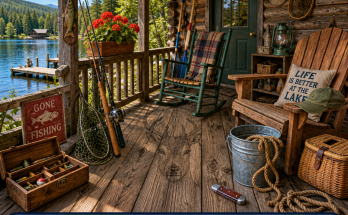
They pull up to the cabin 20 minutes later, strung fairy lights glowing across the porch, the grill on the back deck already burning orange. She turns off the car, leans over the center console, and wipes a smudge of sawdust off his cheek with the pad of her thumb. He doesn’t flinch.