Cole Henderson, 58, retired U.S. Forest Service firefighter, had spent the last seven years perfecting the art of disappearing in his small Montana town. His flaw? He’d convinced himself loneliness was a choice, not a habit, and he’d dodged every community event, every set up, every casual invitation since his wife Linda passed from ovarian cancer in 2016. The post-pandemic push for “intentional connection” the town council kept yammering about made his jaw tight. He’d only shown up to the farmers market afterparty at the Pine Tap bar because his next door neighbor had left a half dozen fresh trout on his porch that morning, and he owed her a favor.
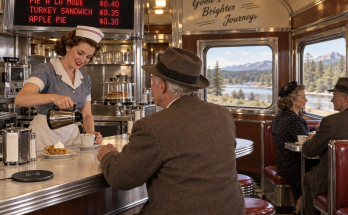
He’d claimed the far end of the bar an hour earlier, nursing a hazy IPA that tasted like citrus and pine, the sticky Formica under his forearms still dotted with condensation from the last drink he’d ordered. The air reeked of fried pickles, malt, and the faint, sharp tang of wildfire smoke drifting down from the Bitterroot Range 20 miles west. He was half considering slipping out the back when the stool next to him scraped across the worn wood floor, and a woman slid into it so close their denim-clad knees brushed for three full seconds before she shifted back.

He knew who she was: Mara Carter, 52, who ran the native plant nursery at the edge of town. The local gossip mill had chewed her up for weeks three years prior, when she’d left her high school sweetheart husband for a female park ranger she’d met on a reforestation project. Cole had never spoken to her, but he’d seen her at the hardware store, hauling 50 pound bags of soil, her work boots caked in mud, a streak of pine sap across her left cheek. He’d felt a weird, hot twist in his chest every time, half discomfort at the judgmental rumors he’d heard from old fire crew buddies, half sharp, unnameable curiosity he’d squashed down immediately.
She leaned past him to grab a stack of napkins from the holder behind his elbow, her flannel sleeve brushing his, the scent of peppermint lip balm and cedar cutting through the bar’s noise for a split second. “Sorry,” she said, and when he looked over she was holding his gaze, not flinching, her hazel eyes flecked with gold, a small, teasing smile tugging at the corner of her mouth. “Figured you wouldn’t bite. Most folks around here act like I’m contagious.”
Cole grunted, shifting his weight, suddenly hyper aware of the gray stubble on his jaw, the scar across his right eyebrow from the 2017 Lolo Peak fire. “I don’t pay much attention to town gossip,” he said, and it was true, mostly. He just hadn’t known what to say to her, didn’t know the unspoken rules of talking to someone who’d rejected the small town life he’d always drifted along with, didn’t want to step into something he didn’t understand.
She laughed, a low, rough sound that made his neck feel warm. “Sure you don’t. You’ve parked three spaces away from me at the hardware store every Tuesday for six months. I’ve noticed.” She ordered a dry cider from the bartender, and when she turned back to him, she nudged his boot with hers under the bar. “You worked that Lolo fire, right? I recognized the scar. We donated 12,000 saplings for the reforestation the next year. You were at the volunteer kickoff, wearing that same ratty Forest Service hat you’ve got hanging on the barstool next to you.”
Cole blinked, taken aback. He’d barely spoken to anyone at that kickoff, had spent the whole day hauling saplings and avoiding small talk. He hadn’t thought anyone had noticed him at all, let alone her. They talked for the next hour, and he forgot to check his phone, forgot to plan his exit. She told him about the time a black bear broke into her nursery and ate half her stock of wild huckleberry seedlings. He told her about the time he’d gotten stranded on a fire line for three days with nothing but a bag of beef jerky and a bottle of warm Gatorade. Every time she laughed, she leaned a little closer, their knees touching again, her shoulder brushing his when she gestured to the bartender for another round.
A group of drunk college kids on a road trip pushed through the crowd ten minutes later, one of them slamming into Mara’s back hard enough that she pitched forward into Cole’s chest. His hand flew to her waist automatically to steady her, his palm pressing through the thin flannel of her shirt, and he froze, half ready to pull away, half wanting to pull her closer. She didn’t move back. She tilted her head up, her breath warm against his jaw, and she smelled like peppermint and cider and pine, and the noise of the bar faded to a low hum in his ears. “You gonna kiss me, or are you gonna keep overthinking it?” she said, quiet enough only he could hear.
Cole didn’t answer. He leaned down and kissed her, slow, not pushy, his hand still on her waist, and she tangled her fingers in the gray hair at the nape of his neck, just like Linda used to, but it didn’t feel like a betrayal, it felt like coming up for air. They left the bar ten minutes later, he carried her half full cider for her, their boots crunching on the gravel parking lot, the sky streaked pink and orange with the sunset, the distant fire smoke still hanging soft in the air. She stopped next to her beat up old pickup truck, leaned against the door, and pulled him down for another kiss, her hand tucked into the back pocket of his jeans.
When they pulled apart, she pulled a handwritten nursery card out of her jacket pocket, scribbled her cell number on the back of it, and pressed it into his palm. He folded it into the pocket of his flannel, right next to the worn photo of Linda he kept there, and he didn’t feel guilty at all. He waited until she pulled out of the parking lot, waving out the window, before he turned to walk to his own truck, the slip of paper still warm against his chest.