Milo Thorne, 59, has built custom split-cane fly rods for pro anglers across the globe for 37 years, and hasn’t let anyone who isn’t paying him step foot in his workshop since his wife left for an Alaska fishing guide eight years prior. His biggest flaw, one he’ll admit to only after three IPAs, is that he assumes every stranger who strikes up a conversation is angling for a peek at his $120,000 collection of vintage 1950s bamboo rods, not actual connection. He only leaves his wooded hilltop property once a week, for Wednesday trivia at the downtown Asheville beer garden, where he sits alone at the end of a high top, drinks cold hazy IPA, and usually places second or third, no fanfare.
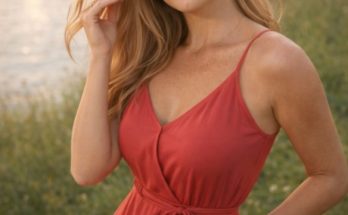
The air that May Wednesday smelled like fried dill pickles, pine drifting down from the mountains, and the sharp, sweet tang of the peach hard seltzer the woman two seats down was sipping. He’d noticed her when she walked in an hour prior, dark hair streaked with silver pulled into a loose braid, worn flannel tied around her waist, scuffed hiking boots on her feet. He recognized her immediately: Clara Hale, ex-wife of his former best friend Jeb, who he’d stopped speaking to 12 years prior after a stupid blowup over a regional fly fishing tournament prize. He’d always thought she was too good for Jeb, even back when he was married, even back when he and Jeb spent every weekend on the river together. He’d never let himself think about it beyond that, though. It felt like a line he wasn’t supposed to cross, no matter how badly Jeb had screwed him over.

Their teams were seated at adjacent high tops, the only gap between them a wire basket of spiced boiled peanuts and a bowl of barbecue potato chips. When the trivia host asked a question about 1990s freshwater sportfishing records, she called out an answer before he could: rainbow trout, 42 pounds. He snorted before he could stop himself. “Brown. Caught in the Manistee River, 1992. 40 pounds even.” She turned to him, eyebrows raised, and held his gaze for three full beats, longer than polite, the corner of her mouth twitching up. When the host confirmed he was right, she leaned across the gap between their tables, her shoulder brushing his bicep, and smelled like jasmine hand lotion and lemon drops. “Guess the rod builder knows his fish,” she said, and he realized she knew who he was too.
He told himself he shouldn’t engage. Told himself this was exactly the kind of messy, complicated connection he’d spent eight years avoiding. Told himself she was probably only talking to him because Jeb had mentioned his rod collection once, or she needed a custom rod for a relative’s birthday, something transactional, nothing more. But every time their teams went back and forth on a question, she turned to him first to gloat or tease, her knee brushing his under the table when she shifted in her seat, her fingers brushing his when they both reached for the same salted peanut at the same time. He felt the faint callus on the tip of her index finger, the kind you get from turning thousands of book pages, and he remembered Jeb saying she ran the small town library out in Mars Hill.
When trivia ended, her team won by one single point, a question about 1970s children’s book authors he’d blanked on because he’d been too busy staring at the way the string lights caught the silver streaks in her hair. She slid onto the empty stool next to him after her team left, holding her half-empty seltzer, and laughed when he grumbled about the loss. “You would’ve gotten that one if you weren’t too busy looking at me instead of the screen,” she said, and he didn’t even bother denying it. She told him she’d divorced Jeb seven years prior, after he cheated on her with a tournament volunteer, that she’d seen him drop off a stack of vintage fishing books at her library six months earlier and had been working up the nerve to talk to him ever since. She said she never cared about Jeb’s stupid drama, that she’d always thought he was the nicer one, the quieter one, the one who actually cared about the fish instead of just the trophy.
Milo felt the tight knot in his chest he’d carried for eight years loosen, just a little. He’d spent so long assuming everyone wanted something from him, so long avoiding any line that felt even a little taboo, that he’d forgotten what it felt like to have someone look at him like he was interesting, not just his collection or his skills. It had started raining while they talked, soft, warm spring rain that dotted the pavement outside the beer garden, and when she said she needed to walk to her car three blocks over, he offered to walk with her, no hesitation.
They stopped under the awning of the closed used bookstore next to the parking lot when the rain picked up, standing so close their shoulders pressed together, the sound of the rain tapping against the metal awning loud enough to drown out the distant traffic. He pulled a small, hand-carved wooden bobber out of his jacket pocket, something he’d whittled that morning while waiting for a rod finish to cure, the kind he usually gave away to kids at the local fishing derby. “For when you come out on the river with me,” he said, before he could talk himself out of it. She took it, her fingers brushing his again, and tucked it behind her ear, the bright red paint of the tip peeking out next to her braid. She leaned in, and kissed his cheek, slow, soft, the faint taste of peach seltzer on her lips when they brushed the corner of his mouth. The rain picked up, tapping harder against the awning, and neither of them moved to leave.