Rafe Marino is 58, runs a vintage travel trailer restoration shop out of a converted barn three miles outside Bend, Oregon, and hasn’t willingly made small talk with a single woman who didn’t want to pay him for a new Airstream subfloor in 12 years. His divorce got messy, half the town took his ex-wife’s side, so he learned to keep his head down, stick to his work, and avoid any situation that might give the local gossips at the Main Street diner something to titter about over their peach pie. It’s not that he’s lonely. Most days, he’d rather sand down rusted aluminum trim than fumble through awkward small talk anyway.
It’s 94 degrees the third Saturday of August, the kind of dry heat that makes the asphalt at the county fairgrounds swap meet shimmer like standing water. He’s been hunting for a 1962 Airstream door latch for three hours, boots dust-caked, his faded gray Carhartt shirt soaked through at the armpits, when he cuts toward the food truck row for a root beer float. He’s 10 feet from the truck when a woman stumbles over a loose cinder block half-buried in the dirt, slams right into his chest, and splatters a half-melted vanilla ice cream cone down the front of his shirt.

She’s the woman who moved into the cottage next to his shop two months prior. He’d nodded at her once from across the fence, then high-tailed it back inside when she waved, because he’d heard the gossip: she left her husband of 21 years back in Salem, ran off with no warning, was “looking for trouble” according to the lady who runs the feed store. He’d avoided her ever since, even going so far as to pull his shop gate closed early if he saw her out tending to the potted herbs on her porch.
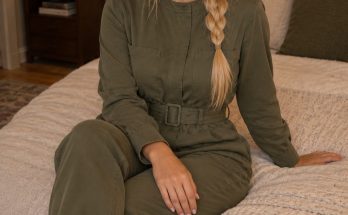
Now she’s leaning in, her bare arm brushing his chest as she swipes at the ice cream streak with a crumpled napkin, and he can smell coconut sunscreen and the faint, sweet tang of cherry lip gloss. Her hair is pulled back in a messy braid, stray strands sticking to her sun-pink forehead, freckles dusting the bridge of her nose, her hazel eyes wide with apology. “Oh my god, I am so sorry,” she says, laughing a little like she’s embarrassed, not upset. “These boots have zero traction, I swear. Let me buy you whatever you were gonna get to make up for it.”
He should say no. He should wipe the ice cream off himself, mumble that it’s fine, grab his float, and head back to his truck before anyone sees them together. But the way she’s looking at him, no polite fake pity, no judgment, just that half-smile like she already knows he’s gonna say yes, makes him pause. “Root beer float,” he says. “Extra foam.”
They sit at a splintered pine picnic table under the only oak tree on the fairgrounds, the leaves rustling just enough to cut the worst of the heat. She says her name is Lila, she’s starting a native plant nursery on the cottage property, she moved out here to get away from a life that felt like it was shrinking around her by the day. She’d watched him sanding down the teal 1960s Trade Wind he’s been finishing for a couple from Seattle for weeks through the fence, thought the custom terracotta tile backsplash he put in the kitchenette was the coolest thing she’d ever seen. He’s shocked he never noticed her watching; he’s usually hyper-aware of any movement around the shop.
He tells her about the divorce, about how half the town still side-eyes him when he walks into the diner, about how he stopped bothering with any kind of social life because it wasn’t worth the hassle of people assuming he was on the hunt for a new wife. She snorts, sipping her lemonade, and says the feed store lady’s gossip is half garbage: she left her husband because he’d been cheating with his secretary for three years, and she got sick of pretending she didn’t know. “Small towns love to make the woman the villain,” she says, picking at a splinter on the table. “Easier than admitting a man might’ve been a grade-A idiot.”
A group of the guys he plays poker with every Friday walks past, one of them whistling, another winking so hard his whole face crumples. Rafe tenses, his jaw tightening, already running through excuses to leave. He doesn’t need people starting rumors that he’s the rebound guy, that he’s messing around with the new “trouble” in town.
Lila leans across the table, her thumb brushing a crumb of funnel cake off his lower lip, her touch warm against his stubble, lingering for half a second longer than it needs to. “Let them stare,” she says, soft enough only he can hear, and there’s no tease in it, just quiet confidence. “I think you’re way more interesting than anything they can make up.”
The tightness in his chest loosens all at once. He’s spent 12 years letting other people’s opinions dictate what he does, what he says, who he talks to, and for what? The same people who talk about Lila talked about his ex first, then talked about him, they’ll talk about someone else next week. He’s tired of hiding.
He asks her if she wants to come back to the shop with him. The Trade Wind is finished, he’s got a mini fridge in it stocked with cold IPA, he can show her the hidden storage compartment he built under the bed for camping gear. She grins, the corners of her eyes crinkling, and says yes before he even finishes the sentence.
They walk back to his beat-up 2008 Ford F-150 together, her shoulder brushing his every few steps, the sound of the fairground’s cover band playing old Johnny Cash fading behind them, the smell of pine and dry grass hanging thick in the air. He holds the passenger door open for her, she hops up onto the seat, and when he climbs into the driver’s side, she slides a crumpled napkin across the center console, her phone number scrawled across it in sparkly pink gel pen. He tucks the napkin into the chest pocket of his Carhartt, right next to the crumpled list of parts he’d come to the swap meet to find, and turns the key in the ignition.