Rafi Novak, 53, makes his living sanding dents out of vintage campers and rewiring their finicky 1960s electrical systems, so his hands are perpetually calloused, streaked with grease that never fully washes out even after three scrubs with lava soap. He’s avoided anything resembling a date since his divorce eight years prior, convinced any flicker of interest in another person is just midlife restlessness, not something worth upending his quiet routine for. His only regular social outing is the weekly bluegrass jam at a scuffed roadhouse on the edge of Knoxville, where he fixes the band’s broken strings for free and nurses a single bourbon on the rocks for three hours straight before driving back to his barn conversion on the edge of the Smokies.
He’s halfway through that bourbon on a rainy Tuesday, just tightening the G string on the fiddle player’s beat up instrument between sets, when someone bumps his elbow hard enough to slosh amber liquor over the rim of the glass onto his faded Carhartt flannel. He huffs a laugh, ready to brush it off, when a woman shoves a crumpled paper napkin into his hand, their knuckles brushing for a beat longer than necessary. It’s Marnie, the woman who bought the run down farmhouse next to his property three weeks prior. He’d avoided her on purpose up until that point, assumed she was a suburban transplant who’d call the county on him for running his sanders at 7 a.m. She’s wearing a faded 1987 Dolly Parton tour tee, steel toe work boots caked in mud, has a tattoo of a 1920s county map curling around her left wrist. She doesn’t step back when he turns to face her, standing close enough that he can smell pine resin and lavender hand cream over the beer and fried onion fumes of the bar.
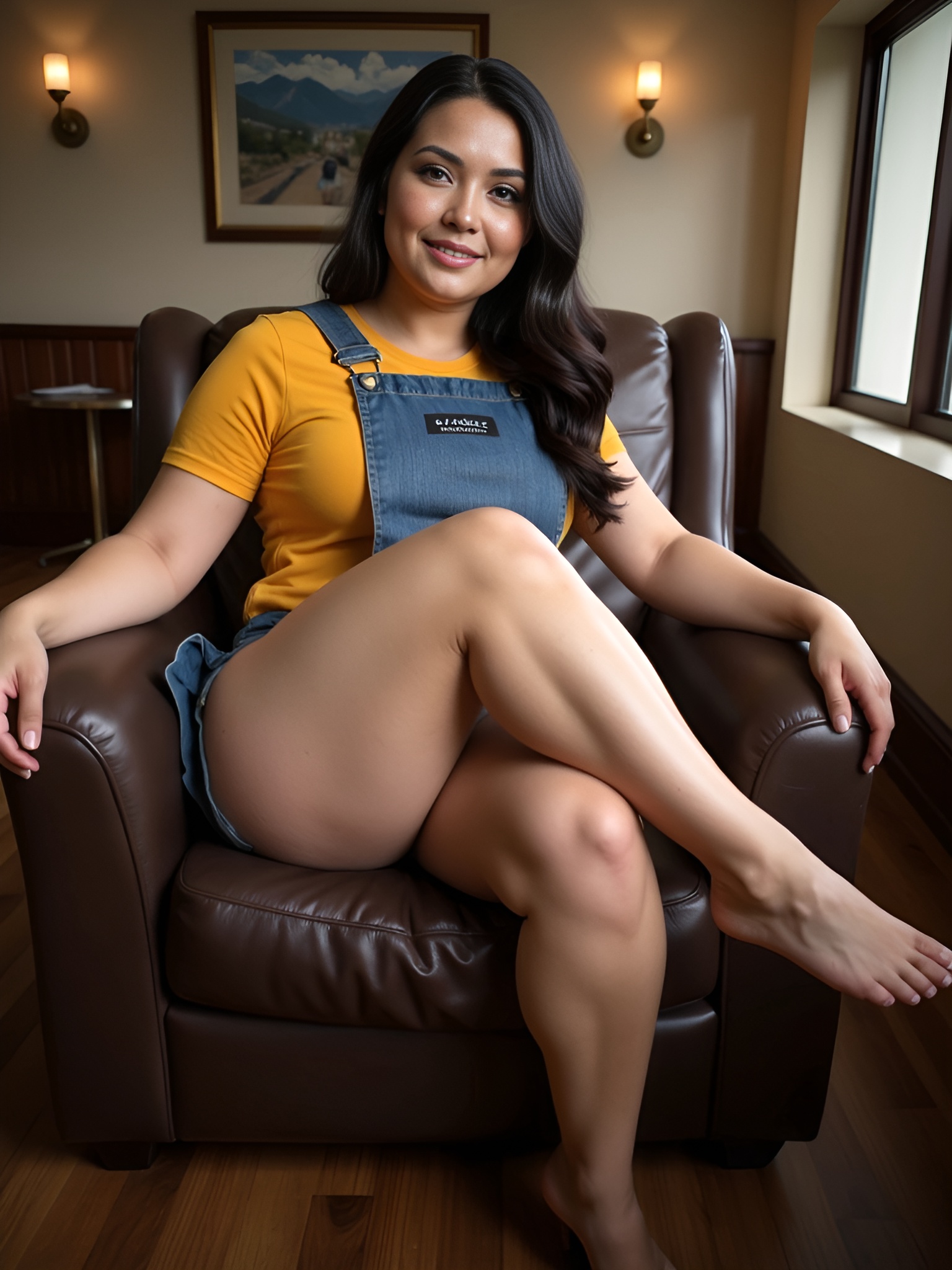
She teases him first, grinning, says she’s lost count of how many times she’s heard his air compressor running through the tree line separating their properties, that she doesn’t mind—she’s up at 6 most mornings digitizing old county records for the archive anyway. He’s torn immediately, half of him itching to make an excuse and bolt back to his quiet barn, the other half stuck on the way her dimple pops when she laughs, the way she leans in when he rambles about the 1962 Airstream he’s restoring for a client in Asheville, like she’s actually listening instead of just being polite. They slide into a booth at the back of the bar when the band starts playing again, their knees bumping under the table when the fiddle picks up a fast reel, and she doesn’t shift her leg away. He keeps waiting for that jolt of disgust he’s come to associate with the idea of letting someone new into his life, the voice in his head that says this is too much trouble, that she’ll leave just like his ex did, but it never comes. All he can focus on is the way her knee is pressed warm against his denim, the way she tucks a strand of curly brown hair behind her ear when he tells her about the time he towed a broken down 1970s VW camper out of a ditch in the middle of a snowstorm.
She mentions offhand that she found the original 1927 deed to his barn in the archive earlier that week, that he’s eligible for a historic preservation grant he’s been trying to qualify for for two years, and he blinks like he’s misheard her. He’s put in three applications for that grant, all rejected because he couldn’t prove the barn was built before 1930. He’s so surprised he reaches across the table to grab her wrist before he thinks better of it, his calloused fingers wrapping around the inked map on her skin, and she doesn’t flinch, just holds his gaze, her smile softening into something less teasing, more intimate.
The rain picks up as the jam wraps up, fat drops hammering the tin roof of the roadhouse, and she groans when she checks her phone, says her old Ford F150 is stuck in the mud in the gravel parking lot. He offers to pull it out with his work truck before he can talk himself out of it. They trudge out into the rain, his baseball cap keeping most of the water off his face, and when he climbs into the bed of his truck to grab the tow strap, she reaches up to brush a wet oak leaf off his shoulder, her hand lingering on the back of his neck for a beat. He freezes, fully expecting himself to pull back, to make a joke about not mixing neighbors and whatever this is, but he doesn’t. He looks down at her, her mascara smudged a little at the corners from the rain, her lower lip caught between her teeth like she’s waiting for him to pull away. He leans in instead, kissing her slow, the rain dripping off the brim of his cap onto her cheek, tasting bourbon and the peppermint gum she’d been chewing all night.
He pulls her truck out in ten minutes flat, the tires spinning in the mud for a few seconds before catching, and they drive back to their adjacent properties in separate vehicles, his headlights following her taillights down the winding dirt road. She pulls into her driveway, rolls down her window, yells over the rain that she has fresh coffee inside, and that she brought that deed with her, if he wants to come look at it. He doesn’t hesitate. He parks his truck at the edge of her driveway, grabs his work gloves off the passenger seat, and walks up her porch steps, noticing the jar of dill pickles she’d mentioned making on the rail, the one she said she was going to leave for him to thank him for not minding her wandering his property line to take photos of the old wild blackberry bushes. He sets his work gloves on the porch rail next to the jar, and steps inside before the rain can soak through the back of his flannel.