Merv Pritchard, 61, makes his living restoring antique typewriters out of a 300-square-foot shop off Madison’s State Street, and he’s spent the last eight years talking himself out of any situation that could lead to something even resembling a date. His wife died of ovarian cancer in 2015, and after three separate women hit on him within a month of her memorial service only to ask for a discount on his rare 1930s Underwood collection, he decided romance was off the table for good. His only consistent weekly outing is the east side beer garden every Thursday, where he drinks Spotted Cow, eats a brat with extra sauerkraut, and avoids small talk as much as humanly possible.
It was 7:17 PM on a sticky July Thursday when she slid onto the bench across from him, the legs of the picnic table scraping against the crushed limestone so loud he jumped a little, spilling a drop of beer on his grease-stained Carhartts. He recognized her immediately: Lila Marquez, 48, the city council member who’d just spent three months fighting the local NIMBY coalition to keep the beer garden open, and the girl who’d babysat his two kids all through high school. He’d not spoken to her more than twice in the last decade, mostly just waving when they passed each other on the sidewalk, and his first thought was that she was here to ask for something, same as everyone else.

“Mind if I sit?” she said, setting a hard seltzer down on the table, her linen blouse dotted with grass stains from the community garden she tended on weekends. “Every other table’s full, and I’d rather not sit next to the guy who’s been yelling about property taxes for 20 minutes.” Merv nodded, fumbling for a napkin to wipe the beer off his jeans, and she beat him to it, dabbing at the wet spot with the edge of her own napkin, her cold hand brushing his thigh for half a second before she pulled back. The air smelled like grilled onions and cut clover, the bluegrass band off to the side fumbling through a cover of “Folsom Prison Blues,” and Merv could feel his face going red, the way it used to when he was 16 and couldn’t talk to girls without stuttering.
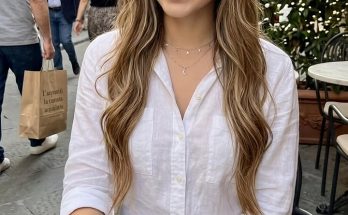
She asked about the shop first, and he rambled about the 1957 Royal he’d just finished restoring for a local poet, the way the keys stuck before he sanded down the internal levers, the satisfying ding of the carriage return when it worked right. She didn’t look bored, the way most people did when he talked about typewriters, leaning in across the table, her knee brushing his under the wood every time she shifted to get a better look at the calluses on his hands. She told him she still had the beat-up Smith Corona he’d given her for high school graduation, the one with the cracked space bar he’d told her she could fix herself if she stopped being scared of taking things apart. “I never did fix that space bar,” she said, grinning, her teeth bright against sun-tanned skin, dark hair streaked with silver pulled back in a loose braid. “I kept meaning to bring it by your shop, but I was nervous you’d yell at me for waiting 30 years to get it fixed.”
Merv’s throat went dry. He’d spent so long thinking of her as the snot-nosed kid who’d raid his fridge for popsicles after school, who’d begged him to teach her to change the oil in her first beat-up Honda Civic, who’d cried at his wife’s funeral when no one was looking. He felt guilty for noticing the way the sun hit her silver hoops, for liking the sound of her laugh, for the way his chest tightened when she brushed a crumb off his flannel sleeve. The voice in the back of his head kept calling him a creep, kept telling him this was wrong, kept reminding him he was too old, too set in his ways, too broken to be flirting with someone he’d watched grow up. But every time she leaned in a little closer, every time her hand brushed his when she reached for her seltzer, that voice got a little quieter.
When the band slowed to play a wobbly cover of “I Walk the Line,” a handful of couples got up to dance on the grass next to the stage. Lila nudged his arm with her elbow, her eyes crinkling at the corners. “C’mon. I saw you dance at your daughter’s 2019 wedding, I know you’ve got moves, even if your knees creak.” Merv opened his mouth to say no, to say he didn’t dance, to say his knees did in fact creak so bad he could barely walk up stairs some days, but she grabbed his hand before he could protest, pulling him up off the bench. Her hand was warm, calloused at the fingertips from planting tomatoes, and it fit in his like it was made to.
She rested her hand on his shoulder when they got to the dance floor, and he settled his other hand on her waist, pulling her just close enough that he could smell lavender shampoo in her hair, faint rye whiskey on her breath. “I’ve had a crush on you since I was 16, you know,” she said, quiet enough only he could hear over the music, her lips brushing the edge of his ear when she spoke. “You were the only adult who ever took me seriously, back when everyone thought I was just the weird kid who wanted to be a politician.” Merv froze for half a second, then pulled her a little closer, his guilt melting away faster than the popsicles she used to eat on his back porch. He didn’t care what the neighbors would say, didn’t care he’d spent eight years swearing off dating, didn’t care that the space bar on that old Smith Corona was probably more broken than he was.
They danced for two songs, and he did step on her toe once, and she laughed so hard she snort-laughed, hiding her face in his shoulder when it happened. When the band stopped to take a break, she tucked a loose strand of hair behind her ear, and said she had a bottle of 10-year rye back at her place, that Smith Corona sitting on her kitchen table waiting for a tune up. Merv nodded, grabbing his faded Packers hat off the picnic table, followed her across the park, his hand brushing against hers the whole way. The faint jingle of her keychain as she unlocked the driver’s side door sounded better than any typewriter bell he’d ever heard.