Manny Ortega, 52, has spent the last three years avoiding every small town gathering within a 20-mile radius of his rented ranch house. As a minor league scout for the Toledo Mud Hens farm system, he’s on the road 10 months out of the year, so the excuse writes itself: he’s working. His real flaw, the thing he won’t admit even to his older brother, is that he hates the pitying looks he gets from neighbors who still whisper about his wife’s sudden heart attack at 49, the way people pat his arm like he’s a lost golden retriever that wandered away from its owner. He only shows up to the summer beer garden fundraiser for the local youth baseball league because his boss threatened to reassign him to scouting winter ball in the Dominican if he skipped another community outreach check-in.
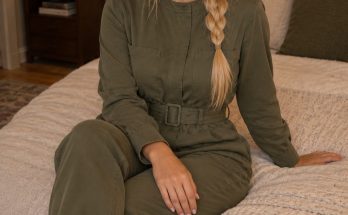
He’s leaning against a splintered oak picnic table, nursing a lukewarm IPA that tastes like wet cardboard, when the condensation from a cold seltzer can brushes the bare skin of his wrist. He jumps a little, looks over, and blinks. It’s Clara Bennett, 48, the high school principal who he’s only ever seen in tailored navy blazers and sensible loafers, yelling at teens for vaping in the parking lot after games. Today she’s in a loose linen sundress the color of wild clover, her dark hair pulled back in a messy braid that’s slipping over one shoulder, no makeup except for a swipe of pink lip balm. She smirks when she sees him flinch, and he realizes he’s been staring.

“Thought you’d skip this too,” she says, nodding at the stack of scout reports sticking out of the canvas bag slung over his shoulder. “Board voted on new dugouts for the Babe Ruth league last month. You missed all the yelling about which color to paint them.”
Manny snorts, shifting his weight so his boot scuffs the dusty grass. The air smells like charred bratwurst and cut clover, cicadas buzzing so loud in the maple trees overhead he has to lean in a little to hear her. He’s spent three years keeping people at arm’s length, half convinced that wanting anything even close to happiness means he’s betraying his late wife Maria’s memory, half disgusted with himself for even thinking about flirting with anyone. But Clara doesn’t pat his arm, doesn’t ask how he’s holding up, doesn’t mention Maria at all. She just teases him about the time he tripped over a base while running drills with the 12U team two years back, and he laughs so hard beer sloshes over the edge of his can onto his jeans.
They drift away from the crowd after that, leaning against the split rail fence at the edge of the lot where the cornfield starts, shoulder to shoulder so their arms brush every time one of them shifts. She tells him she’s finalizing her divorce from her husband of 20 years, that no one in town knows yet, that she’s been dying to quit her job and move to a cabin up north but can’t leave the kids she’s worked with for a decade. He tells her about the 17-year-old lefty he’s been scouting down in Carbondale, the one who throws 92 mph and has a curveball that drops so fast batters trip over their own feet swinging at it, does a terrible impression of the kid’s lopsided windup that makes her snort seltzer out of her nose.
When he stops laughing, he realizes they’re so close he can smell the lavender shampoo in her hair, see the faint smattering of freckles across her nose that he never noticed when she was wearing her principal blazer. She reaches up to brush a crumb of brat bun off the chest of his faded flannel shirt, her fingers lingering on the fabric for two, three beats longer than she needs to, and he doesn’t pull away. The guilt he’s carried for three years hums in the back of his head, quiet for the first time, no longer screaming that he’s doing something wrong. No one is watching them, everyone else is too busy yelling over cornhole games or chasing toddlers around the picnic tables, and for the first time since Maria died, he doesn’t feel like half a person.
She tilts her head up to look at him, her brown eyes bright in the glow of the fairy lights strung above the fence, and asks if he wants to drive out to the old ball field off Route 12 tomorrow morning, watch that lefty pitch his summer league playoff game. He says yes before he even thinks about it. She squeezes his wrist, her palm warm through the frayed cuff of his shirt, before she turns to walk back to the group of PTA moms waving her over. He watches her go, the hem of her sundress fluttering around her calves as she laughs at something one of the women yells to her, and takes a long sip of his beer, now warm enough that the bitter taste doesn’t even register. The sun is dipping below the cornfield, painting the sky pink and tangerine, and the first firefly of the night flickers past his face, so close he could reach out and catch it if he wanted.