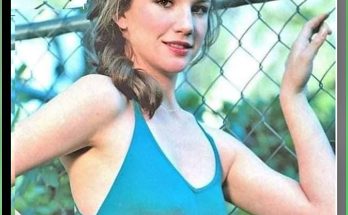
Roy Pacheco, 62, retired smokejumper and current owner of Bend’s only family-run bait and tackle shop, had only agreed to stop by the town’s summer street fair to drop off a custom rod he’d built for the youth outdoor program raffle. He’d planned to be gone in three minutes flat, before any of the local busybodies could corner him to ask about his love life, the same question they’d pestered him with every single year since his wife Linda passed eight years prior. He hated the pity in their eyes, the way they treated him like a broken thing that needed fixing, usually with a cousin or a neighbor or a recently divorced church secretary they were desperate to set him up with.
The air smelled like grilled bratwurst and lemonade mixed with the pine dust that hung over every corner of Central Oregon that time of year, Alan Jackson’s “Chattahoochee” blaring from a crackling speaker by the food trucks. He’d just handed off the rod to the teen running the raffle table and turned to bolt when his boot caught on the wooden edge of a toddler’s red wagon, sending him lurching sideways before a firm hand wrapped around his bicep to steady him.

He looked down, and it was Elara Voss. The new librarian, 58, who’d moved to town three months prior from Portland, the woman the entire town had been gossiping about nonstop since she’d shown up in a beat-up Subaru with a tattoo of a fox curling up her left forearm and no husband in tow. The rumor mill said she’d left a wealthy tech executive husband after 28 years of marriage, that she’d run off with a 20-something barista before ditching him too, that she was “bad news” for the quiet small-town vibe. Roy had avoided her on purpose, not wanting to be the next lead story in the town’s weekly coffee shop gossip roundup.
Her hand was still on his arm, warm through the thin cotton of his work flannel, her nails painted a soft muted blue that matched the streaks in her gray-streaked auburn hair. She was holding a stack of hand-painted pine wreaths, the ones she’d been selling to raise money for the library’s after-school program, the scent of fir and her lavender perfume wrapping around him before she even spoke. “You know, if you wanted to avoid me that bad, you could’ve just waved and kept walking instead of taking a header over a wagon,” she said, grinning, the corner of her mouth tugging up in a way that made the crinkles around her hazel eyes deepen.
He stammered out an apology, pulling his arm back slowly, his skin tingling where her palm had pressed against it. He’d only spoken to her once before, two months prior, when he’d dropped off a box of old smokejumping memoirs he’d had sitting in his attic, and he’d left before she could ask him any questions about the margin notes he’d scrawled in half of them. She didn’t let him leave this time, though, mentioning that she’d read every single one of those books, that his notes about the 1994 Salmon River fire had made her cry, that she’d never met anyone who’d actually seen that blaze up close.
He found himself following her to a splintered wooden bench tucked between the library booth and the honey stand, sitting down before he even thought about what he was doing. The sun was warm on his face, the hum of the crowd fading a little as she sat down next to him, their knees brushing when she shifted to set the wreaths at her feet. She bought them both a cherry snow cone from the kid walking by with a cooler, the sticky syrup dripping down his wrist before he could lick it off, and she laughed when he fumbled with the paper cone, reaching over to wipe a glob of bright red syrup off his jaw with her thumb.
The contact was small, almost accidental, but it sent a jolt up his spine he hadn’t felt in close to a decade. He’d spent so long telling himself he didn’t need anyone, that the town’s nosiness wasn’t worth the hassle of putting himself out there, that he was fine living alone with his old hound dog and his fishing boats and his quiet shop. But sitting there next to her, listening to her talk about how she’d left her husband because he’d spent 20 years treating her like a piece of furniture instead of a person, how she’d moved to Bend because she’d always wanted to learn how to fly fish, how she loved that no one here initially knew her name or her baggage, he realized the disgust he’d been feeling for weeks wasn’t for her, it was for the small-minded gossip that had made him avoid her in the first place.
He didn’t care what the town said. He hadn’t felt this seen, this light, in years. When she finished her snow cone, wiping her sticky hands on the hem of her frayed denim shorts, he asked her if she wanted to come out on his 16-foot drift boat with him the next morning, to fish for steelhead up on the Deschutes, said he’d bring the black coffee and the bacon sandwiches if she brought whatever terrible 90s romance novel she was currently reading. She agreed immediately, squeezing his hand for two full seconds before she stood up to grab her stack of wreaths.
He walked her to her beat-up Subaru, standing by the driver’s side door while she tossed the wreaths in the back seat. She leaned in before she got in, pressing a quick, soft kiss to his cheek that left the faint taste of cherry and lavender on his skin. He watched her taillights fade around the corner of Oak Street, the sticky cherry residue on his jaw still tingling where her thumb had touched.