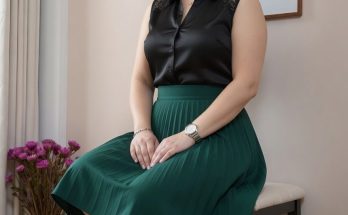
Ronan O’Malley hauled the last 10-pound cooler of leftover smoked sockeye into the back of his beat-up Ford F-150, the salt and alder smoke clinging to his Carhartt sleeves sharp enough to cut through the sweet clover and blackberry scent drifting from the honey stand next to his. The September sun hung low over the Columbia River, painting the parking lot of the farmers market in soft gold, most vendors already gone, only a handful of stragglers loading crates into their cars. He’d spent all day dodging small talk, turning down offers of homemade pie and extra tomatoes from the other vendors, sticking to his usual script: thanks, but I’ve got enough at home. He liked his routine. No surprises, no messy conversations, no one asking questions about the empty house he went back to every night.
He was wiping down the folding table he used to display his salmon jars when she stepped into his space, close enough that he could smell lavender shampoo mixed with the faint stickiness of honey on her hands. Mara Carter, 58, ran the honey stand, had moved to Astoria three months prior from Portland after her divorce, and he’d been avoiding looking directly at her since the first week she set up shop. She looked exactly like the girl he’d had a crush on his junior year of high school, before he’d met his ex-wife, before he’d dropped out to work on the fishing boats, before he’d convinced himself that kind of soft, uncomplicated want was for kids who didn’t have to work 18-hour days to pay rent.

She held out a squat glass jar of honey, the label handwritten in loopy cursive: Wild Blackberry, Late Harvest. Her forearm brushed his when she passed it over, the contact warm through the thin cotton of her flannel shirt, and he flinched like he’d been burned. “Got three extra jars I don’t feel like hauling back to my place,” she said, leaning against the edge of his table, her hazel eyes flecked with gold holding his gaze longer than was strictly polite. “Noticed you dump a spoonful of honey in your coffee every morning when you set up. Figured you’d get more use out of it than I would.”
He opened his mouth to turn her down, the same automatic refusal he used for everyone, but the words stuck in his throat. He hated owing people things. Hated the idea that a small gift would turn into a conversation, turn into an invitation, turn into something he’d have to watch walk away eventually. The 4-inch scar on his forearm from a 2009 winch accident throbbed, a faint, familiar ache he always got when he was nervous, and he rubbed at it with his free hand, the rough callus on his thumb catching on the old, raised skin.
She didn’t push, just held the jar out, her fingers loose around the base, a small, knowing smirk tugging at the corner of her mouth like she knew exactly what was going through his head. “No strings,” she said, her voice low enough that only he could hear it, the hum of a distant lawn mower and the crash of waves from the river drowning out everything else. “I just think your salmon’s the best thing at this market, and I wanted to say thanks for not complaining when my beehive boxes took up half your parking spot last week.”
He laughed, a rough, rusty sound he hadn’t heard come out of his own mouth in months, and took the jar from her. Their knuckles brushed when he grabbed it, the skin on her hands soft but calloused at the fingertips from working with hives, and he didn’t pull away this time. The jar was warm from sitting in the sun all day, sticky with a thin layer of honey around the rim, and he twisted it in his hands, watching the thick, amber liquid slosh against the glass.
He didn’t know what made him say it. Maybe it was the way the sun was hitting her auburn hair, streaked with strands of silver, making it glow like copper. Maybe it was the fact that she hadn’t pushed him, hadn’t asked prying questions about his scar or his empty truck or the ring indent still faint on his left hand after 12 years. “You wanna get a beer?” he said, the words coming out faster than he could stop them, his throat tight with nerves. “The dive bar down on Marine Drive has fried pickles that taste exactly like the ones we used to get at the bait shop back when I was a kid.”
Her face lit up, a bright, unselfconscious smile that made his chest feel tight, and she nodded immediately, leaning back off his table to grab her own bag from next to her honey bins. “I’ve been waiting for you to ask that for three weeks,” she said, and he felt his face heat up, like he was 17 again, getting caught staring at her in the high school cafeteria.
They walked side by side down the sidewalk, their shoulders brushing every few steps, the warm breeze off the river carrying the smell of salt and fried fish from the food carts along the waterfront. He didn’t talk much, at first, but she filled the silence, telling him about her bees, about the way the blackberry bushes around her small house out in Seaside grew so thick they almost covered the porch, about how she’d left Portland because she got sick of the noise and the traffic and the people who never said hello to you on the street. He found himself listening, actually listening, not just nodding along while he planned his escape, and when she laughed at his terrible joke about the time he accidentally caught a seagull in his fishing net, he felt something loosen in his chest he’d thought was frozen solid years ago.
The bartender at the dive bar, a guy named Jake who’d been serving Ronan beer since he was 19, raised an eyebrow when they walked in, but he didn’t say anything, just set down two cold pints of IPA on the booth table they slid into, along with a basket of fried pickles still steaming from the fryer. Mara set the jar of blackberry honey down in the middle of the table, tapping the lid with her fingernail, and told him she had a recipe for honey-glazed salmon that her grandma used to make, that she’d bring it over to his place sometime if he wanted to try it.
He picked up the jar, twisting the lid open just enough to smell the sweet, berry-tinged scent mixing with the salt of the pickles and the bitter hop smell of the beer, and for the first time in 12 years, he didn’t feel the urge to run.