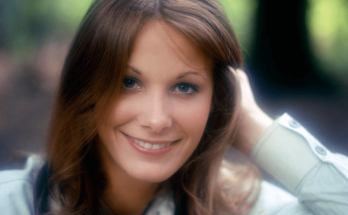
Elias Voss, 62, spent 31 years teaching high school woodshop before he retired three years prior. His biggest flaw? He’d shut down every attempt at casual connection in the eight years since his wife Linda passed from breast cancer, bailing on neighborhood barbecues, skipping the weekly pub trivia he’d once dominated, even avoiding small talk with the grocery store cashier just to dodge the pitying half-smiles people gave him when they noticed his empty wedding ring finger. He filled his days carving custom cutting boards in his garage workshop, selling them every Saturday at the Portland suburbs farmers market, a routine so rigid he could set his watch by the exact minute he finished setting up his stand each week.
Mid-September brought crisp, apple-scented air, the kind that nipped at the tip of his nose and made his knuckles ache a little when he hauled stacks of maple and walnut boards out of his beat-up 2004 Ford F150. He dropped a full bottle of food-safe mineral oil halfway through setup, it rolling past his work boots and stopping at the scuffed work boot of the woman running the honey stand next to his, the one who’d moved into the spot three weeks prior, who he’d avoided speaking to beyond a stiff nod. She bent to pick it up, her flannel shirt riding up a little at the waist to show a sliver of sun-weathered skin, and held it out to him. Their fingers brushed when he took it, her palm calloused from lifting hive boxes, his rough from decades of sanding wood. He mumbled a thanks, glanced up, and noticed a faint smudge of pale beeswax on her left cheek, right below the edge of her faded baseball cap.

He went back to arranging his boards, but couldn’t stop glancing over at her stand. She laughed loud, unselfconscious, when a toddler dropped a glass jar of wildflower honey at her feet, the golden liquid spreading across the asphalt. She didn’t huff or sigh, just pulled a crumpled bandana out of her jeans pocket, mopped it up, and handed the teary kid a honey lollipop to calm him down. He found himself smiling before he could stop himself, then immediately felt guilty, like he was cheating on Linda by even noticing another woman was funny, or warm, or smelled like clover and cedar when the wind shifted her direction.
The sky opened up halfway through the market, a cold Pacific downpour that came out of nowhere, fat raindrops soaking through the edge of his pop-up tent in seconds. They both scrambled to cover their inventory, him fumbling with a plastic tarp to drape over his cutting boards, her hauling heavy boxes of jarred honey under the partial cover of her own tent, which was leaking badly at the seams. A stack of his premium maple boards, the ones he’d spent three weeks sanding and finishing, started to tip toward the wet asphalt, and she lunged to catch them, pressing up tight against his side for three full seconds to stabilize the stack, her shoulder warm even through his waterlogged flannel. He could feel the heat of her hip pressed to his, the faint dampness of her hair brushing his forearm when she leaned in, and his throat went dry.
They got everything covered a minute later, huddled under the only dry patch of his tent, rain drumming so loud on the vinyl above them they had to lean in to hear each other talk. He learned her name was Mara, 58, she’d been a park ranger in Yellowstone for 25 years before she moved to Oregon to run a small apiary after her kid left for college in Pullman. She learned he used to build custom treehouses for his woodshop students every spring, that he still had a scar on his left bicep from a fall off a 12-foot ladder building one in 2017. He fought the urge to reach up and wipe the beeswax smudge off her cheek the entire time they talked, the voice in his head yelling that he was too old for this, that he should just go home to his empty house and his leftover meatloaf, that Linda would be hurt if she saw him this flustered around a stranger.
The rain let up after 20 minutes, most vendors already packing up to head home, the asphalt dotted with discarded paper cups and crushed apple cores. Mara offered him a jar of wild blackberry honey as thanks for sharing the tent, the label hand-stamped with a tiny line drawing of a bee. He grabbed the small walnut cutting board he’d carved the week prior, the one with a tiny engraved bee in the corner he’d planned to give his niece for her birthday, and handed it to her. Their hands touched again when they swapped items, and he didn’t pull away this time, his thumb brushing the back of her knuckle for a beat longer than necessary.
She tilted her head, the corner of her mouth tugging up in a half-smile, and said she had a pot of chili simmering on her stove at her cottage 10 minutes away, along with a pan of cornbread she’d baked at 5 a.m. that would taste even better slathered with the blackberry honey. He hesitated for half a second, the old guilt pricking at his chest, then looked at her eyes, crinkled at the corners, no pity there, no expectation, just easy warmth, and said yes.
They loaded their coolers and inventory into the back of his truck, him holding the passenger door open for her when she climbed in, the radio playing a 90s country track he and Linda used to dance to in the kitchen on Saturday nights. He pulled into her driveway 10 minutes later, the front yard dotted with three wooden hive boxes, a weathered porch swing hanging from the eave of the small white cottage. She unlocked the front door, the smell of chili and cinnamon and toasted cornbread washing over him immediately, and kicked off her work boots by the door. She turned to face him, that same half-smile on her face, and he lifted his hand, brushing the faint beeswax smudge off her cheek with the pad of his thumb.