Rafe Mendez, 53, minor league baseball scout for the Hickory Crawdads, propped his scuffed work boots on the lower rail of the bar at The Wooden Bat, nursing his second Pabst Blue Ribbon of the night. His sunburnt forearms stuck slightly to the sticky Formica counter, the edge of his leather-bound scouting notebook smudged with peanut oil from the bag of boiled peanuts he’d picked up at the high school game earlier that afternoon. He’d spent the last three months tracking the 17-year-old left-handed shortstop from West Caldwell High, clocking his 4.2 second 40-yard dash, marking the way he adjusted his swing on inside fastballs, and ignoring the league memo taped to the dashboard of his 2019 Ford F-150: no unsupervised contact with prospect family members outside official league events. The rule was non-negotiable, one he’d followed religiously for 22 years in the business, no exceptions.
He was halfway through scribbling a note about the shortstop’s improved fielding percentage when she sat down two stools over, the scent of lavender shampoo cutting through the bar’s usual mix of old beer, fried okra, and cigarette smoke. She ordered bourbon on the rocks, no water, and when the bartender slid the glass to her she tapped the rim twice with one long, calloused finger before taking a sip. Rafe glanced up, recognized her immediately: she’d been standing by the third base dugout that afternoon, wearing a faded West Caldwell baseball hoodie, yelling encouragement when her son turned a double play to end the seventh inning.
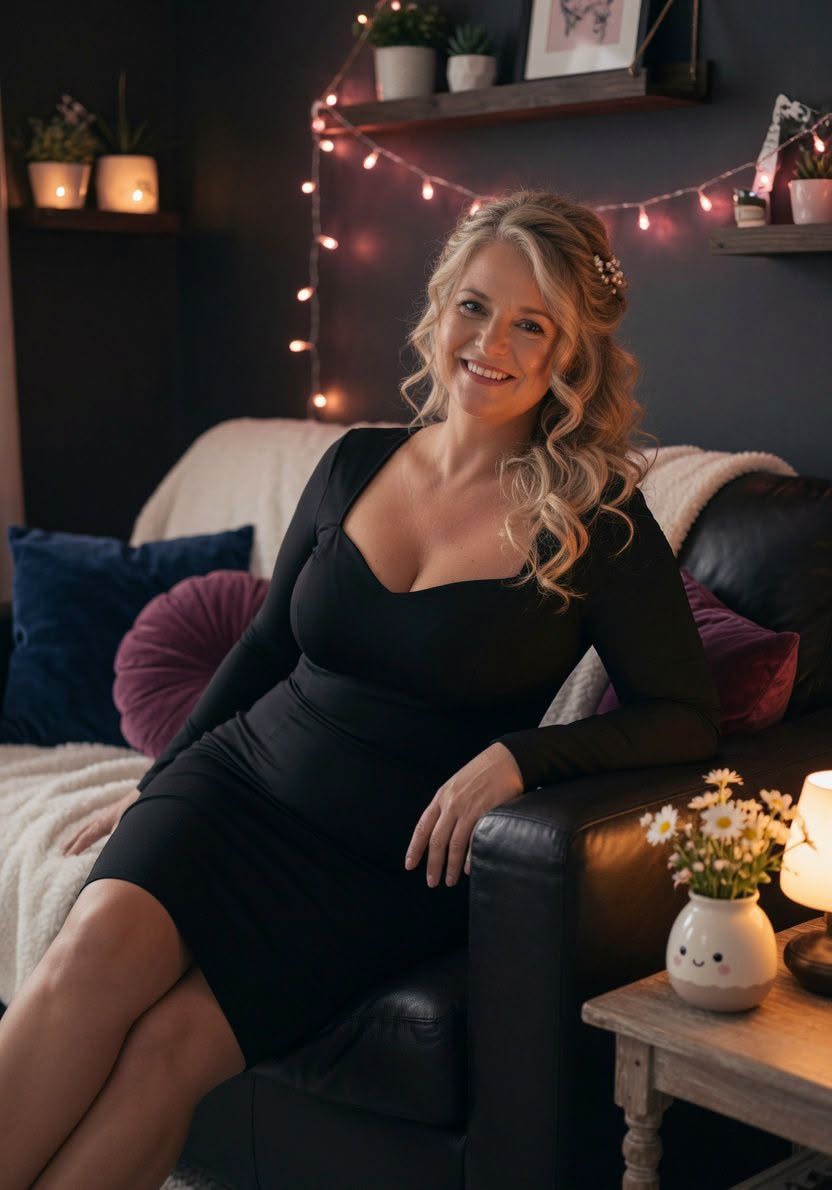
She caught him staring, lifted her glass in a small toast, and he nodded back, already kicking himself. He knew better. If anyone from the league office saw him even talking to her, he’d be written up at minimum, fired at worst. And even if that wasn’t a factor, he’d sworn off any kind of casual or romantic connection after his divorce eight years prior, when his ex-wife had left him for a high school math teacher who was home every night for dinner. He’d spent the better part of a decade convincing himself anyone who showed interest in him only wanted free game tickets, or a favor for a kid who didn’t deserve a spot in the farm system.
But when she shifted on her stool to face him, her knee brushing his denim jeans through the gap between the stools, he didn’t move away. “That umpire’s strike zone was garbage today,” she said, and her voice was a little rough, like she smoked half a pack a day and yelled at games for a living. Rafe laughed, a short, rusty sound he hadn’t heard come out of his own mouth in months. “Told the same thing to the head coach after the game. Guy told me I was just bitter I had to drive an hour and a half to watch a bad call end a perfect game.” She leaned in then, her elbow brushing his when she set her glass down on the counter, and he could see the faint sun spots on her cheeks, the tiny scar above her left eyebrow from when her son had hit her with a line drive during backyard practice when he was 10.
They talked for two hours, the bar slowly emptying out around them, the jukebox cycling through old Merle Haggard and Johnny Cash tracks. He told her about driving 12 hours through a snowstorm to watch a prospect pitch in Ohio in 2017, she told him about working three jobs to pay for her son’s travel ball fees when he was 14, fixing cars on the weekends to make extra cash. Every time she laughed, her shoulder brushed his, and every time he reached for his beer, his hand brushed hers on the counter, small, accidental touches that sent a jolt up his arm he hadn’t felt since he was a kid. Part of him screamed to leave, to pay his tab and drive home, to not risk the job he’d poured his entire life into, to not let himself get attached to someone who would only end up leaving when they realized he was still on the road 100 days a year. The other part of him couldn’t remember the last time someone had talked to him like he was a person, not just a scout who could hand out roster spots like candy.
When the bartender flipped off the neon “OPEN” sign and started wiping down the last of the counters, she slung her canvas tote over her shoulder and said she’d walked to the bar, her house was three blocks away, but the streetlights were out on the next block, and she didn’t feel like walking alone. Rafe hesitated for half a second, then tossed a twenty on the counter to cover both their tabs and stood up.
The humidity hit him the second they stepped outside, thick enough to drink, fireflies blinking in the oak trees lining the sidewalk, crickets chirping so loud he could barely hear the sound of their shoes on the asphalt. Halfway to her house, she stopped, turned to face him, and touched his forearm, her hand warm and calloused, the same way he’d imagined it would be when he watched her tap her bourbon glass earlier. “I know the league rules,” she said, her eyes dark in the faint glow of the porch lights down the block. “I don’t want anything for Jax except what he earns. I just liked talking to you.”
Rafe didn’t say anything for a long beat, then he laced his fingers through hers, his calloused scouting hands wrapping around hers easily. She smiled, and tugged him toward her porch, the screen door slamming shut behind them when they stepped inside.