Harvey Donovan had spent most of his sixty-eight years carefully controlling the world around him. As a retired civil engineer, he was accustomed to precise calculations, predictable outcomes, and clear instructions. People’s feelings, however, were messy, and he’d long avoided getting too close to them—until he met Eleanor Whitman.
Eleanor was seventy, a retired playwright who had spent decades observing the human heart in its most complicated forms. She carried herself with a grace that belied her age, but it wasn’t just elegance that drew attention—it was unpredictability. She laughed at odd moments, sighed unexpectedly, and sometimes, when she listened, her eyes would glisten as though the past and present were colliding.
They met at a small theater workshop, designed to encourage seniors to explore self-expression. Harvey had signed up out of curiosity—and maybe, deep down, a desire to understand what he had been missing all these years. Eleanor’s presence unsettled him immediately. Not because she demanded attention, but because she radiated a vibrancy he hadn’t realized he craved.
During an improvisation exercise, participants were asked to express a memory through movement. Eleanor’s performance started subtly—shifts of her shoulders, a tilt of her head, a slow, deliberate extension of her arms. Harvey watched, noting the fluidity, the emotion, the way her movements told a story without words. He was used to analyzing structures, not people. Yet he couldn’t look away.
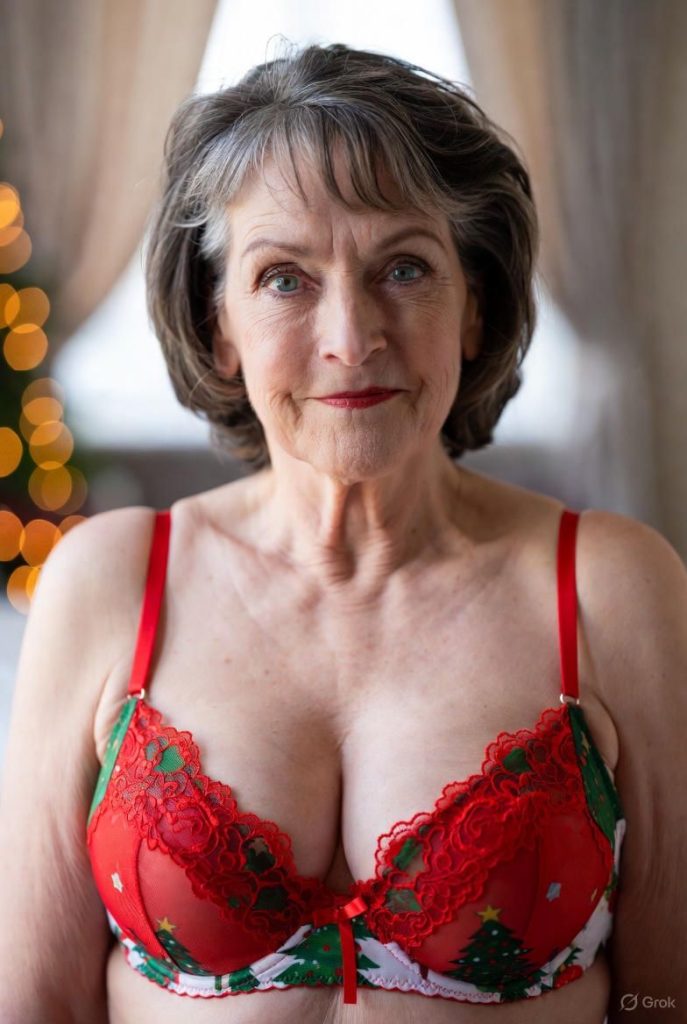
When it was his turn, Eleanor’s eyes followed him. Her gaze wasn’t judgmental, but intensely present. Harvey fumbled through his exercise, stiff and self-conscious, and when it ended, he expected a polite nod, maybe a brief comment. What came instead was an unexpected warmth—a genuine laugh mixed with a soft sigh, as though she had felt his effort and, more importantly, seen the vulnerability behind it.
That moment shocked him. He had spent decades believing emotions could be managed, compartmentalized, and kept tidy. Eleanor’s openness, her fearless expression of feeling at seventy, was a revelation. It wasn’t performative. It was raw, authentic, and startlingly powerful.
Later, over coffee, Harvey realized how much he had misjudged life’s possibilities. Eleanor spoke freely of joys, regrets, and fleeting sorrows, weaving past and present together without hesitation. She allowed herself to feel fully—and expected him to do the same. Her courage to inhabit her own emotions, unfiltered and unapologetic, pulled at him, challenged him, and, for the first time in years, made him question his habitual reserve.
By the time he left that afternoon, Harvey knew he had been confronted with something rare: a woman whose emotions weren’t softened by age but deepened by it. And in that honesty, he saw the truth he had long avoided: connection wasn’t about control or calculation. It was about courage.
At seventy, Eleanor’s emotions weren’t a weakness—they were a force. And Harvey, finally, was ready to feel it fully.