Laura Bennett didn’t announce herself when she entered a room. At sixty-four, she had long outgrown the need for that. Her confidence lived somewhere quieter—in the way she moved without hesitation, in how she met a person’s eyes without challenging them, in the calm certainty that she belonged wherever she chose to stand.
Mark Ellison noticed her at a neighborhood fundraiser held in a renovated warehouse downtown. He was sixty-one, recently retired from a long career in corporate compliance, a man accustomed to structure and restraint. He had come out of obligation more than interest, expecting polite conversations and an early exit. Then Laura walked in.
She wore a simple navy dress, nothing flashy, but it fit her like it had been chosen deliberately. Her hair was styled, not carefully arranged, but intentionally loose, framing her face in a way that felt effortless. Mark couldn’t say what caught his attention first. Only that once he saw her, the rest of the room dulled slightly, as if someone had lowered the volume on everything else.
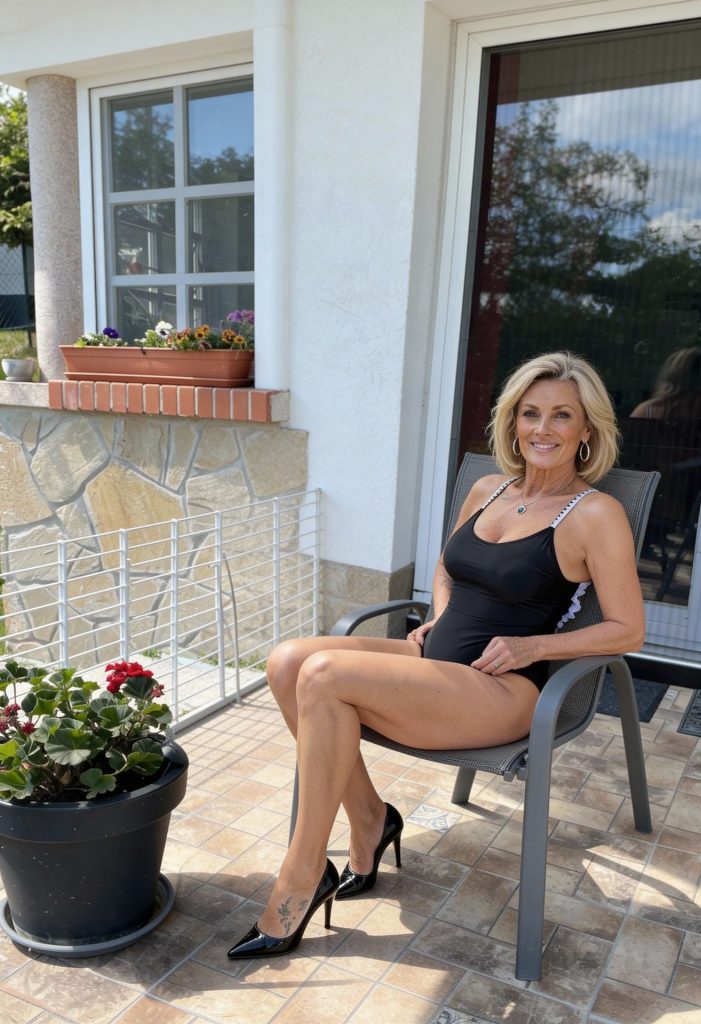
They were introduced by a mutual acquaintance and found themselves standing near the refreshment table. Their conversation began easily—safe topics at first. The event. The neighborhood. Retirement. But Laura listened differently than most people. When Mark spoke, she didn’t rush to respond. She held the space, letting him finish fully, then answered with precision, as if she had weighed her words and decided they were worth saying.
That alone unsettled him.
Her confidence wasn’t loud or performative. It didn’t seek approval. It invited presence. Mark felt himself leaning in without realizing it, lowering his voice, matching her pace. When she smiled, it wasn’t constant. She smiled when something genuinely amused her, and that made it matter more.
At one point, someone interrupted to greet her. Laura turned toward them, placing a light hand on Mark’s forearm as she did—an unconscious gesture, brief and grounding. When she turned back, she didn’t apologize. She simply resumed the conversation where they’d left off, as if the connection hadn’t wavered for a second.
Mark felt it then—the subtle shift. The recognition.
Later, they stepped outside onto the patio, the evening air cool against their skin. The city hummed softly around them. Laura rested her elbows on the railing, looking out rather than at him. That, too, was part of it. She didn’t perform interest. She assumed it.
“People misunderstand confidence,” she said, almost casually. “They think it’s about certainty. It’s not. It’s about being comfortable with not needing control.”
Mark considered that. He realized how often he had mistaken caution for wisdom, restraint for strength. Standing beside her, he felt both exposed and strangely at ease.
When it was time to leave, they didn’t rush the goodbye. Laura met his eyes, steady and unguarded. “I enjoyed this,” she said simply. No promise. No implication. Just truth.
Mark watched her walk away, aware of how little she had done—and how deeply it had registered. Days later, he still found himself thinking about her. Not because of anything dramatic that happened, but because of how she made him feel: present, unarmored, awake.
Women like Laura didn’t linger in memory because they demanded it. They stayed because their confidence left an imprint. Quiet. Certain. Impossible to forget.