Arthur Callahan had negotiated oil contracts in three countries, stared down hostile boardrooms, and once calmly handled a refinery fire without breaking a sweat. At seventy-one, retired and comfortably settled in Scottsdale, he believed very little could rattle him anymore.
Except her.
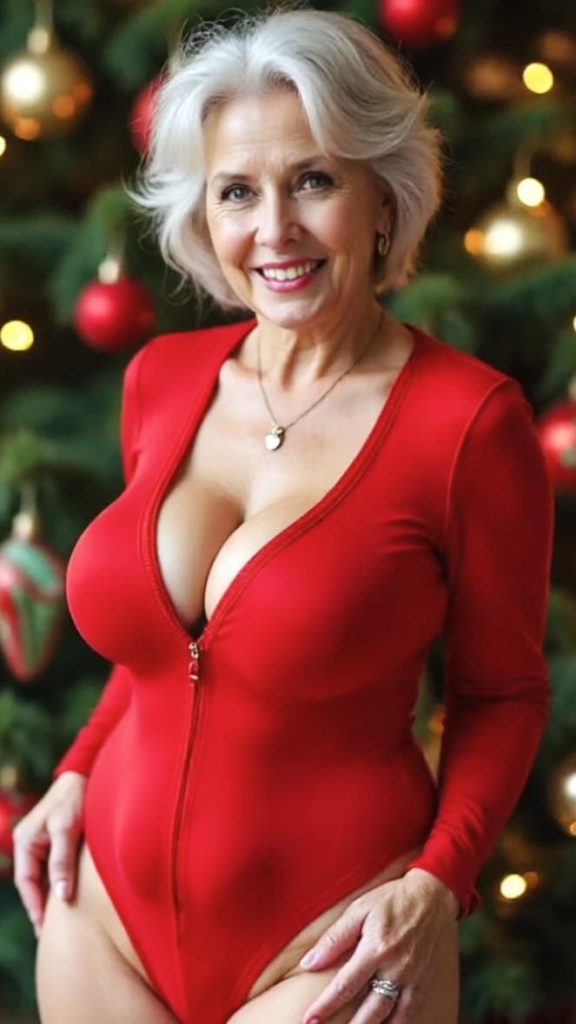
Evelyn Monroe was sixty-eight, a retired gallery curator with sharp cheekbones, silver-streaked auburn hair, and a posture that suggested she’d never once asked permission to take up space. She dressed simply—tailored slacks, soft silk blouses—but wore them like a quiet dare. There was nothing flashy about her. That wasn’t her style.
What made Arthur nervous wasn’t her beauty, though that hadn’t faded in the slightest.
It was her certainty.
They had met at a charity fundraiser three years earlier. He remembered the first time she looked at him across a crowded patio, jazz humming in the background, candlelight catching in her eyes. She hadn’t smiled right away. She had studied him, as if deciding whether he was worth her time.
When she finally approached, she didn’t flirt. She assessed.
“You look like a man who’s used to being in charge,” she’d said evenly.
Arthur had chuckled. “Occupational hazard.”
Evelyn stepped closer, close enough that he could feel the warmth from her arm brushing his sleeve. Her voice lowered just a fraction. “And do you ever get tired of that?”
That was the moment his composure shifted.
At sixty-eight, she still made him nervous for one reason: she saw through him faster than he could prepare a defense.
Arthur had always worn control like armor. After his divorce at fifty-five—a slow, polite unraveling built on emotional distance—he had promised himself he’d never again let a woman see the parts of him that hesitated. That needed.
Evelyn didn’t tear the armor off.
She simply waited for him to set it down.
On a warm Thursday evening, they sat on his back patio, desert air cooling after sunset. A single lantern cast soft light over the stone table. Evelyn crossed her legs slowly, deliberate but unforced, the movement drawing his eye before he could stop himself.
She noticed.
Of course she noticed.
“You’re staring,” she said, amusement flickering at the corner of her mouth.
Arthur cleared his throat. “Just admiring the view.”
Her gaze held his, steady and unblinking. Then she leaned forward, elbows resting on her knees. The distance between them shrank. He caught the faint scent of her perfume—something warm, layered, unmistakably feminine.
“Arthur,” she said quietly, “why do you tense up every time I look at you like that?”
He shifted in his chair, suddenly aware of the way his fingers tightened around his glass. “Like what?”
“Like I already know what you’re thinking.”
There it was again. That certainty.
She wasn’t guessing. She was observing.
Evelyn had spent decades reading art collectors, donors, men who believed their wealth made them opaque. She understood posture, silence, breath. She recognized the subtle way Arthur’s chest rose deeper when she moved closer. The way his jaw tightened when she touched his arm.
He wasn’t nervous because he didn’t want her.
He was nervous because he wanted her without strategy.
Without leverage.
She reached across the table and placed her hand over his. No rush. No drama. Just skin against skin. Her thumb traced the faint line of a vein along his wrist, light enough to be dismissed as accidental—except it wasn’t.
His pulse betrayed him instantly.
Evelyn’s lips curved slightly. “You still react,” she murmured.
“I’m human,” he replied, though his voice had dropped lower than intended.
She shifted her chair closer until their knees brushed. The contact sent a subtle jolt through him. He could handle mergers worth millions, but this—this quiet proximity—undid him.
“At our age,” she said softly, “most people settle into predictability. Safe conversations. Safe touches.”
Her fingers slid from his wrist to his palm, lacing slowly with his. “You don’t feel safe with me.”
It wasn’t a question.
Arthur exhaled. “You make it difficult to stay composed.”
Evelyn leaned in, her face inches from his now. Her eyes softened, but the intensity remained. “Good.”
He swallowed.
She wasn’t trying to dominate him. She wasn’t playing games. The reason she still made him nervous was simpler, more dangerous.
She required him to be present.
No rehearsed lines. No executive calm. No polished detachment.
Just him.
A man in his seventies whose heart still accelerated when a woman he desired leaned close enough for him to feel her breath.
“Do you know why I enjoy that look on your face?” she asked, voice barely above a whisper.
“Why?”
“Because it means you’re not finished. Not numb. Not resigned.”
Her forehead brushed lightly against his. A small touch. Intimate without spectacle. His free hand rose instinctively to her waist, feeling the steady strength there.
Evelyn didn’t pull away.
“You make me nervous too,” she admitted quietly.
He blinked. “I do?”
She nodded. “Because you still matter to me.”
The confession hung between them, heavier than flirtation. Real.
Arthur felt something shift inside him—something unarmored. The nervousness wasn’t weakness. It was proof of aliveness.
He tightened his hold on her hand, then drew her closer, his other arm wrapping around her back. She settled against him with calm assurance, her head resting just below his chin.
The desert night was silent except for the faint rustle of wind.
“At sixty-eight,” he said softly, “you still make me nervous.”
Evelyn tilted her face upward, eyes steady. “And you still lean in anyway.”
That was the reason.
She didn’t let him hide behind age, experience, or pride. She made him feel chosen—and in doing so, she made him choose back.
And for a man who once believed his most electric years were behind him, that quiet, undeniable tension was the most unsettling—and exhilarating—feeling of all.