Harold Jennings had spent most of his life admiring forceful confidence—loud personalities, bold gestures, dramatic charm. At sixty-three, the retired civil engineer had assumed strength was measured by how much attention someone could command. Then he met Eleanor Greene, and he realized how wrong he had been.
Eleanor was fifty-seven, a retired nurse who had spent decades caring for others, often putting her own needs second. She walked through the community center’s annual arts fair with an ease that was almost imperceptible but impossible to ignore. There was no showmanship in her stride—no need to be noticed—but people naturally made space for her presence. Her silver-streaked hair framed a face that had known hardship, laughter, and love, and her eyes carried a steady calm that immediately drew Harold’s curiosity.
They first spoke near a display of handcrafted pottery. Harold offered a casual compliment on a particularly delicate vase, and Eleanor’s soft smile acknowledged him. But what struck him wasn’t the politeness—it was the quiet authority behind her glance, the confidence in her posture, and the deliberate, unhurried way she engaged with the world.
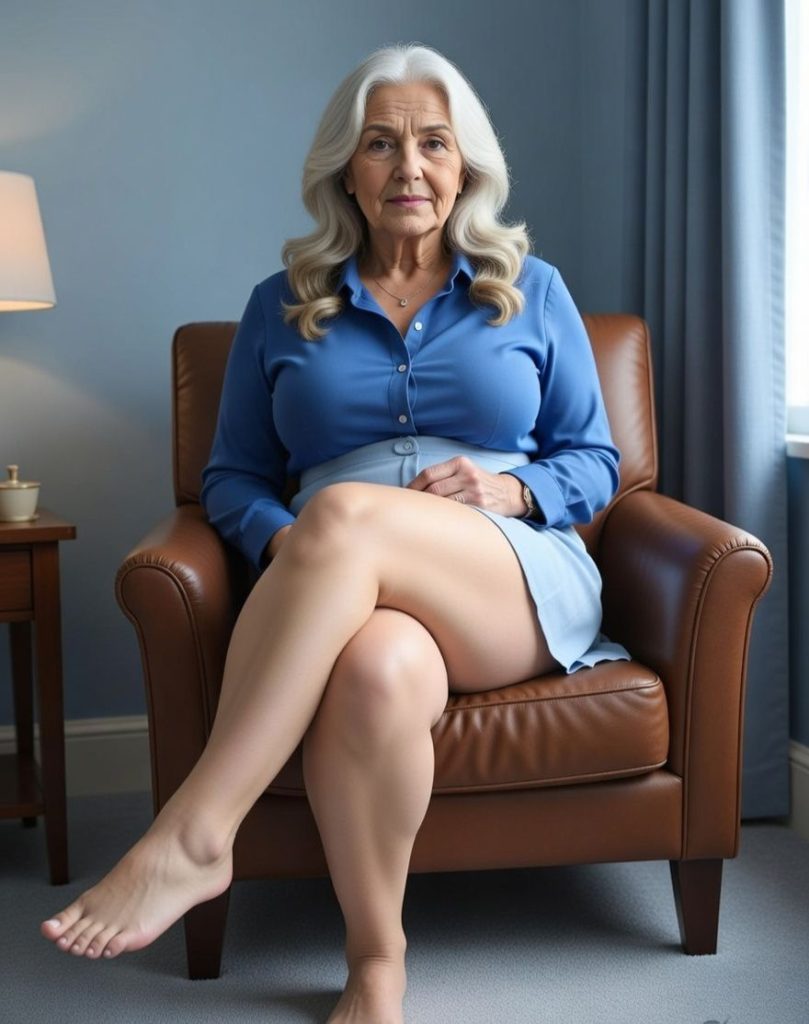
Over the next few weeks, Harold found himself running into Eleanor at local events: book readings, park walks, and neighborhood gatherings. Each encounter revealed subtle layers of her strength. She spoke with intention, choosing her words carefully, and listened fully when others spoke. She didn’t compete for attention or validation—she simply held herself with a steady presence that was both reassuring and magnetic.
One crisp autumn morning, while walking along a tree-lined path, Harold finally asked, “You seem… so grounded. How do you do it?”
Eleanor looked at him, her eyes calm but piercing. “It’s a combination of experience, self-awareness, and letting go of the things that don’t matter. After fifty, many women stop trying to prove themselves to the world. We’ve lived enough to know our value, and we carry it quietly—but firmly.”
Harold watched as she brushed a fallen leaf from her coat, the motion simple, effortless, yet somehow emblematic of her steady control over her life. “So it’s not about being loud or forceful?” he asked.
“No,” she replied. “Strength isn’t always visible. It’s in patience, in self-possession, in the ability to choose your battles and know when to step back. That’s what makes it quiet, and what makes it last.”
As they continued walking, Eleanor’s hand lightly touched his arm when she laughed at a shared joke—a fleeting, unspoken gesture that conveyed both warmth and grounded confidence. Harold realized then that the most compelling strength isn’t performance or dominance. It’s the steady, quiet assurance of someone who has faced life fully, embraced both joys and hardships, and emerged with clarity and self-possession.
By the time they reached the park bench, Harold understood the truth: the quiet strength many women develop after fifty isn’t flashy, dramatic, or demanding—it’s subtle, resilient, and magnetic. It draws people in not because it shouts, but because it simply exists, unwavering, and fully alive.
In that moment, standing beside Eleanor, he felt the profound impact of her presence—an unspoken lesson that true strength, once cultivated, resonates far deeper than any outward display ever could.