When Daniel Mercer first met Eleanor Hayes, he didn’t expect anything unusual.
It happened on a warm Saturday afternoon at a small community garden on the edge of town. Daniel, a sixty-four-year-old retired electrician, had started volunteering there after his wife passed away two years earlier. The quiet routine helped him fill the long afternoons.
That day, he noticed a woman kneeling beside a row of tomato plants, sleeves rolled up, fingers deep in the soil.
She looked to be around sixty. Maybe a little older. Silver hair pulled loosely into a clip, sunlight catching the soft strands around her face. There was a calm confidence about the way she moved—unhurried, comfortable in her own rhythm.
“Those ones like a little more space,” Daniel said, pointing to the plants.
She looked up, studying him with bright, curious eyes.
“Good,” she replied with a playful half-smile. “Because I tend to take up space.”
Her name was Eleanor Hayes. Recently retired from a long career as a high school librarian. Divorced for nearly fifteen years. Two grown daughters living in different states.
And according to her, she had never felt more alive.
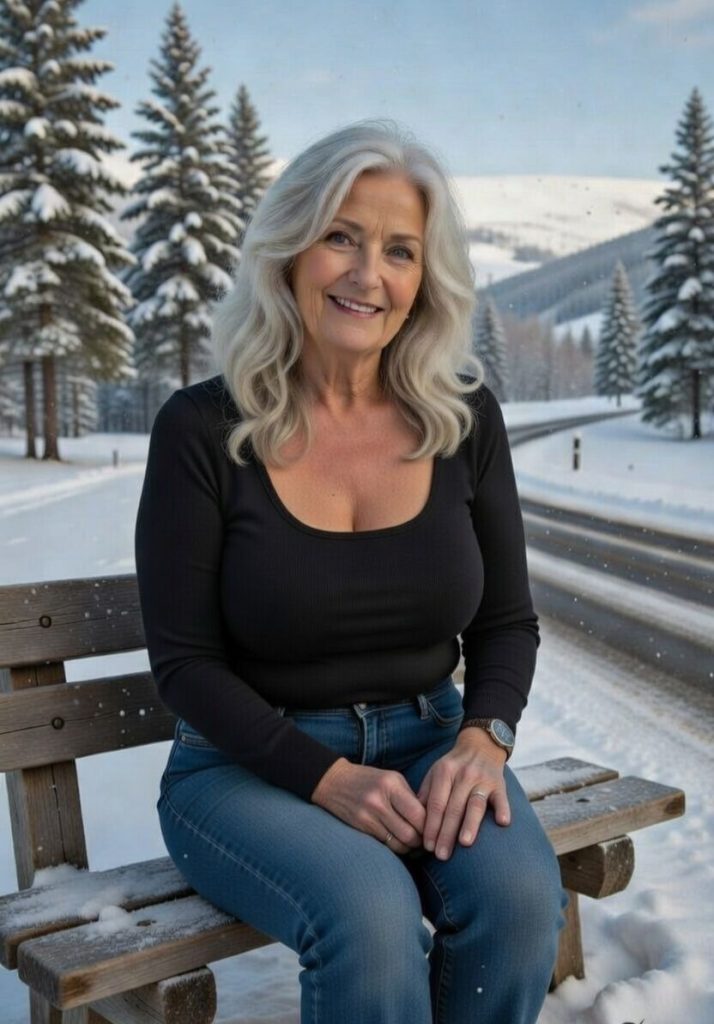
Over the next few weeks, Daniel began noticing something unusual about her.
Most people their age talked about slowing down. Complained about aging. Mentioned doctors, aches, or retirement plans that mostly involved sitting still.
Eleanor did the opposite.
She laughed easily. She walked with purpose. She made steady eye contact when she spoke, as if every moment of conversation actually mattered.
One afternoon they sat together on a wooden bench overlooking the garden beds, drinking lemonade someone had brought for the volunteers.
Daniel shook his head slightly. “You’ve got more energy than people half our age.”
Eleanor chuckled softly.
“That’s because half my life I was busy being careful.”
He raised an eyebrow.
“Careful how?”
She leaned back against the bench, letting the warm breeze move through her silver hair.
“Careful being a good wife,” she said. “Careful being a responsible mother. Careful not to disappoint anyone.”
Her voice wasn’t bitter. Just honest.
“For decades,” she continued, “I worried about what everyone else needed. What everyone else expected. You do that long enough, you forget to ask yourself what you want.”
Daniel watched her quietly.
“So what changed?” he asked.
Eleanor turned her head toward him, a quiet spark in her eyes.
“I turned sixty.”
She smiled in a way that carried both humor and something deeper.
“At some point you realize time isn’t unlimited anymore,” she said. “And that’s strangely freeing.”
A group of younger volunteers laughed loudly nearby, but Eleanor’s voice remained calm and steady.
“I stopped worrying about impressing people. Stopped apologizing for having opinions. Stopped pretending I wasn’t curious about things I’d never allowed myself to explore.”
Daniel leaned forward slightly. “Like what?”
Her smile widened, just a little.
“Travel. Dancing again. Meeting new people without overthinking every conversation.” She paused, studying him for a moment. “Even simple things like sitting on a bench talking to a man I met three weeks ago.”
Daniel laughed under his breath.
“That sounds dangerous.”
“Exactly,” Eleanor replied, her tone playful.
For a brief moment neither of them spoke. The silence wasn’t awkward—it was comfortable, full of quiet possibility.
Daniel noticed something then. It wasn’t youth that made her attractive.
It was the way she carried herself. A sense that she knew who she was now—and had stopped asking permission to be it.
Finally he asked the question that had been forming in his mind.
“So you really believe life begins again after sixty?”
Eleanor looked out across the garden, where late afternoon sunlight painted everything gold.
“I do,” she said softly.
Then she turned back toward him, her expression warm and a little mischievous.
“Because for the first time,” she added, “you’re finally living it for yourself.”
Daniel realized something in that moment.
Maybe the reason some women seemed more interesting after sixty wasn’t because they had changed.
It was because they had finally stopped hiding who they were all along.