Harold Bennett had spent decades believing that speed meant certainty.
At sixty-four, a retired contractor with hands still rough from years of building things that lasted, he trusted momentum. When something felt right, you moved forward. You didn’t hesitate. You didn’t second-guess.
That philosophy had worked for most of his life.
Until he met Julia Reyes.
She was fifty-two, a landscape designer who approached everything differently. Where Harold saw progress as something direct and linear, Julia treated it like something that needed space—time to unfold, time to breathe.
They met over a shared property project. Harold had been hired to consult on structural updates, Julia on redesigning the outdoor space. At first, it was strictly professional.
But something about her slowed him down.
Not intentionally.
Just… naturally.
Julia didn’t rush conversations. She paused before answering, as if she was choosing words that actually mattered. When she walked a property, she didn’t scan it—she absorbed it. Noticing details most people overlooked.
Harold found it frustrating at first.
Then… intriguing.
Over time, their interactions stretched beyond work. Coffee after meetings. Longer discussions that drifted into personal territory—past relationships, regrets, the strange adjustment to a life that had more years behind it than ahead.
There was something building between them.
But unlike anything Harold had experienced before…
It wasn’t moving fast.
In fact, it was moving slower than he expected.
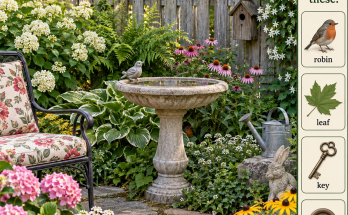
One evening, after a long day reviewing plans, they stood in the backyard of a nearly finished project. The sun dipped low, casting long shadows across the freshly laid stone path Julia had designed.
“It’s taking shape,” Harold said, hands on his hips.
Julia nodded, her gaze sweeping across the space. “It is.”
But she didn’t sound finished.
Harold noticed that.
“You don’t seem satisfied,” he said.
A small smile touched her lips. “I am. Just… not in a hurry to call it done.”
He frowned slightly. “Why not? Looks ready to me.”
Julia turned to him then, her expression calm but thoughtful.
“Because once you decide something’s finished,” she said, “you stop paying attention to it.”
That stuck with him.
Later that evening, they found themselves sitting on the back steps. Quiet. Comfortable.
But Harold felt it again—that slower pace.
Not just in the project.
In her.
When their hands brushed, she didn’t pull away—but she didn’t lean in either. When their conversation edged closer to something deeper, she didn’t retreat—but she didn’t rush to fill the silence.
Everything about her timing was… deliberate.
Slower than usual.
Harold finally said it.
“You move differently,” he muttered.
Julia glanced at him. “Differently than what?”
“Than most people,” he said. “When something’s there… you don’t go after it.”
She studied him for a moment, then looked back out at the yard.
“I used to,” she admitted.
There was something in her tone that made Harold pay closer attention.
“What changed?”
Julia exhaled softly, her shoulders relaxing just a fraction.
“Experience,” she said. “I’ve learned that when something actually matters… rushing it is the fastest way to lose it.”
Harold leaned back slightly, considering that.
“So slowing down means you’re unsure?” he asked.
She shook her head, almost immediately.
“No,” she said quietly. “It usually means the opposite.”
That caught him.
Julia turned toward him again, her gaze steady now.
“When I don’t care, I move quickly,” she continued. “Easy decisions. No weight to them. No risk.”
Harold’s brow furrowed slightly. “And when you do care?”
Her eyes softened, but didn’t waver.
“I take my time.”
The words settled between them.

Not heavy.
But significant.
Harold felt something shift in his chest—a realization he hadn’t considered before.
All his life, he’d associated speed with confidence.
But maybe…
Real certainty didn’t need to prove itself that way.
Julia’s hand rested lightly beside his. Not reaching. Not pulling away.
Just… there.
“I don’t move slow because I’m unsure,” she added softly. “I move slow because I’m paying attention.”
Harold looked at her hand, then at her.
“And right now?” he asked.
Julia didn’t hesitate this time.
“I’m paying attention.”
That was enough.
No dramatic gesture. No sudden shift.
Just clarity.
Harold let out a quiet breath, something in his usual urgency easing for the first time in years.
He didn’t reach for her.
Didn’t push the moment forward.
Because now he understood—
When a woman moves slower than usual…
It doesn’t mean she’s holding back.
It means she’s choosing carefully.
And that choice?
That’s what makes it real.