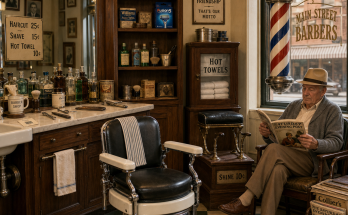
The bookstore had been Richard’s refuge since his divorce. A place where he could be alone without being lonely, surrounded by voices from pages rather than the silence of his apartment. He came every Saturday, settled into the leather chair by the window, read until his eyes grew tired.
She started appearing three months ago. Always the same time, always the same section—literature, the heavy classics that most people avoided. She was sixty, maybe sixty-one, with gray hair in a loose bun and reading glasses perched on her nose. She never bought anything. Just read, standing, for hours.
Richard noticed her because she noticed him first. Glances across the aisle. The slight smile when their eyes met. The way she always seemed to be reading the same shelf he was browsing.
One Saturday, he found the courage to speak.
You have excellent taste, he said, gesturing to the novel in her hands. No one reads that anymore.
She looked up, and her smile widened. People who appreciate quality do. I’m Helen. Richard. And I buy too many books.
That’s not possible. There’s no such thing as too many books. Only insufficient shelving.
They talked. About books, about the peculiar comfort of stories, about the way fiction sometimes understood you better than people did. The bookstore became their meeting place. Saturdays stretched into afternoons, then into dinners at the cafe next door.
Helen was widowed, she mentioned. Five years now. The loneliness had become familiar, almost comfortable. Until it wasn’t.
One evening, as they walked through the park near the bookstore, Helen stopped by a bench. Sat down. Richard sat beside her, close enough to feel her warmth.
I need to tell you something, she said. I’m not looking for a replacement for my husband. I’m not looking for someone to fill a void. I’m looking for someone who understands that I still want things. Still need things. Still have desire that didn’t retire when I did.
Richard nodded. I understand.
I’m not sure you do. Helen turned to face him. There’s a signal. A thing I do when I want someone to keep going. When I want them to know that I’m interested, that I’m receptive, that I want more.
She reached out and took his hand. Placed it on her knee.
And then she squeezed.
Her fingers pressed against his, not hard, but deliberately. The pressure said everything. It said don’t stop. It said I’m interested. It said keep going, I’m receptive, I want this.
That’s the signal, she said. The squeeze. It’s the universal language of women who know what they want. When you feel that pressure, that deliberate grip, it means keep going. It means I’m with you. It means don’t stop.
Richard felt the pressure of her fingers and understood. Understood that he was receiving the signal, that Helen was inviting him to continue, to proceed, to trust that her yes was real and considered and wanted.
He kissed her then, and she squeezed his hand again, harder this time, pulling him closer, and he knew exactly what it meant.
Sometimes words complicate things. Sometimes the simplest signal—a squeeze, a pressure, a deliberate grip—says everything that needs to be said.