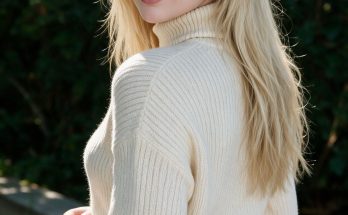
Elias Voss, 57, pushes through the screen door of The Rusty Nail just as the bluegrass trio in the corner runs a rough test of their fiddle line. The air hits him thick with fried dill brine, PBR foam, and the faint, sweet tang of pine from the crowd of festival goers packed into the booths. He’s a custom fly fishing rod builder by trade, spends 90% of his time hunched over a workbench in his converted garage outside Bozeman, wrapping silk thread around graphite blanks and testing taper by the creek behind his property, and this weekly beer run is the only time he intentionally puts himself around other people. He lost his wife Clara to ovarian cancer 8 years prior, and he’s clung to self-imposed isolation ever since, convinced any soft spot for someone new would be a slap in the face to the 22 years they had together.
He grabs his usual stool at the far end of the bar, nods at the bartender who slides a cold can across the wood without asking, and pulls his beat-up leather notebook from the pocket of his oil-stained flannel to jot down a tweak to the new slow-action rod prototype he’s been tinkering with. He’s halfway through scribbling the weight of the reel seat when someone leans over his left shoulder, their arm brushing his ear, to flag the bartender down. He smells jasmine lotion and campfire smoke before he turns, and when he does, he blinks. It’s Lila Marlow, Clara’s cousin’s daughter, the kid he taught to cast a line in the Madison River when she was 12, the one who’d snuck cookies off his plate at every family Christmas for a decade.
She’s 36 now, he remembers, because Clara used to track all the kids’ birthdays on the fridge calendar. There’s a thin, silvery scar slashing across her left cheek from a rock climbing fall she took in college, her dark chestnut hair is pulled back in a messy braid stuck full of pine needles, and she’s wearing the forest green uniform shirt of the county park service, rolled up to the elbows to show forearms crisscrossed with small scratch marks and a tiny tattoo of a trout on her wrist. She grins when she sees him, and the gap between her two front teeth is still the same as it was when she was 14 and crashed his fishing trip with her high school friends. “I thought that was you,” she says, and doesn’t even glance at the empty stools three down, just drags the one right next to him out and sits, her knee pressing lightly against his denim-clad thigh under the bar.
He tenses for half a second, guilt pricking at the back of his throat. He hasn’t seen her since she left for grad school in Oregon 10 years prior, had only heard through family gossip she’d gotten married, then divorced last spring, moved back to run the backcountry campgrounds up in the Gallatin Range. They make small talk first, about the festival, about the low water levels on the Madison this summer, and every time she shifts to laugh or grab her beer, her arm brushes his, or her knee presses a little harder against his, and he can’t stop staring at the way her eyes crinkle at the corners when she teases him about still wearing the same flannel he had on that first fishing trip. He keeps telling himself he’s being ridiculous, that she’s practically family, that he’s 21 years older than her, that this is the kind of thing Clara would roll her eyes at him for even thinking about. But the guilt warps into something warmer when she mentions Clara out of nowhere, says she used to beg Clara for stories about how they met, that Clara always said Elias was the only man who ever let her be exactly who she was, no strings attached. “She’d yell at you for hiding out in that garage all alone, you know,” Lila says, leaning in so close her breath is warm on his cheek over the roar of the band. “I know she would.”
The trio switches to a slow, waltzy cover of a Johnny Cash song, and Lila holds her hand out, palm up, across the bar. “Dance with me,” she says, no hesitation, no shyness, just that same stubborn grin she had when she was 12 and insisted she could cast a 20 foot line without any help. He hesitates, says he hasn’t danced since Clara’s funeral reception, when her drunk uncle made him dance to their wedding song. “That’s a damn shame,” she says, and wiggles her fingers until he sighs and takes her hand. Her palm is calloused, rough from hauling camping gear and chopping firewood, and her fingers laced through his feel solid, real.
She leads him to the small patch of open floor by the jukebox, wraps her arms around his neck, and he settles his hands hesitantly on her waist, so light he’s barely touching her. She huffs a laugh, pulls him a little closer, so their chests are pressed almost together, and he can feel the heat radiating off her skin through their shirts. They sway slow to the music, and for a minute he forgets the crowd, forgets the guilt, forgets the 8 years he spent pretending he didn’t miss being close to someone. She tilts her head up to look at him, her dark eyes steady on his, no teasing, no smile, just soft, and when she leans in to kiss him, he doesn’t pull away. It’s slow, gentle, no urgency, and she tastes like cherry seltzer and mint, and when they pull apart, she’s grinning again. “I’ve wanted to do that since I was 19, came home from college and saw you fixing the porch rail at my grandma’s house,” she says, and he laughs, a real, loud laugh he hasn’t let out in years.
They finish their beers 20 minutes later, and he walks her to her beat-up forest green pickup parked out front. She leans against the driver’s side door, pulls a crumpled receipt out of her pocket and scribbles her address on the back, shoves it into the pocket of his flannel. “I got a stretch of creek up by my cabin no one else fishes,” she says. “Bring that new rod prototype you were writing about. Be there at 10 tomorrow. I’ll make pancakes.” He nods, tucks the receipt deeper into his pocket, and she leans up to kiss him one more time before she climbs into the truck, waves as she pulls out onto the dark street. He stands there for a minute, the cool August air biting at his cheeks, and he realizes he doesn’t feel guilty at all. He pulls the receipt out to glance at the address again, tucks it back safely, and turns toward his own truck, his boots scuffing the gravel, already mentally packing the cooler for the next day.