Rafe Mendez, 53, spent 18 years as a smokejumper before retiring to run a small wildfire risk consulting firm out of his one-room cabin outside Bend, Oregon. His worst flaw, if you asked his old crew chief, was that he’d let guilt wrap around him like a wet wool blanket long after he had any reason to carry it. Seven years prior, his wife had left him for a real estate developer who wore loafers to hiking trails, and he’d shut down every casual advance since, convinced the faint, silvery burn scar snaking up his left forearm and the permanent crick in his neck from a parachute malfunction made him too broken for anyone to want.
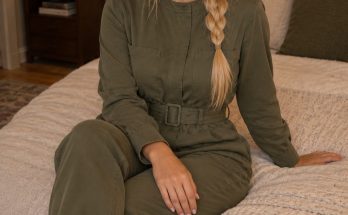
He was leaning against a splintered pine picnic table at the monthly VFW chili cookoff when he spotted her. Lena Marlow, 38, the new Deschutes National Forest ranger who’d dressed him down in front of 40 local homeowners three months prior for underplaying fire risk on a new subdivision near the forest edge. He’d avoided her ever since, partly out of embarrassment, partly out of a stupid, unnameable pull he’d felt the second he saw her, the kind he’d thought died when his wife packed her bags. She was in faded, mud-streaked Carhartts and steel-toe work boots, a handful of pine needles stuck in the end of her thick auburn braid, her cheeks pink from the crisp October wind. She carried a paper bowl of chili in one hand and a root beer in the other, and when she spotted him, she cut straight through the crowd of gray-haired veterans and screaming kids instead of veering off like he expected her to.

She stopped so close he could smell pine sap and peppermint lip balm on her, her shoulder brushing his bicep when she reached for the jar of pickled jalapeños sitting next to his elbow. “You gonna tell me if that brisket chili you’re holding is actually worth eating, or are you just gonna stare at me like I’m about to yell at you again?” she said, holding his eye contact long enough that he had to glance down at his boots first, heat creeping up the back of his neck. He mumbled that it was good, won first place last year, and passed her a napkin when a drop of chili dribbled down her wrist. Their fingers brushed when she took it, a sharp, static jolt that made him fumble the napkin half an inch before she caught it, a small, knowing smirk tugging at the corner of her mouth.
He tried to excuse himself ten minutes later, said he had to be up at 5 a.m. to check a client’s property up near Broken Top. She said her truck was in the shop, she had to check a washed-out trailhead on the same road, asked if she could catch a ride. He hesitated for three full seconds, every alarm bell in his head going off—too young, too much baggage, your ex once joked about how cute you thought she was when you saw her at the grocery store six months back, this is wrong—before he nodded, said sure, as long as she didn’t complain about his truck’s broken radio preset stuck on 90s country.
The rain hit 10 minutes into the drive, fat, cold drops tapping hard enough on the Ford F-150’s roof that he had to turn the wipers up to high. The dirt road turned to mud halfway up the mountain, and he pulled over, muttering that they’d have to wait 20 minutes for the worst of it to pass before they could get any further. The heater blew warm, dusty air over their legs, and Johnny Cash’s “Folsom Prison Blues” hummed low from the speakers. She leaned across the center console, her fingers brushing the burn scar on his forearm, and asked how he got it. He told her about the 2017 Grizzly Complex fire, how he’d carried a 19-year-old rookie out through a wall of flame when the kid’s parachute got tangled in a pine, how a burning branch had fallen across his arm when he’d ducked to shield the kid’s face.
“I heard about that,” she said, her thumb tracing the edge of the scar slow, soft, like she was handling something fragile. “That’s why I didn’t feel bad yelling at you at the meeting. I knew you could take it.” She leaned in before he could say anything, her lips brushing his, slow, not pushy, and for the first time in seven years, he didn’t pull away. He didn’t overthink the age gap, or the fact that his ex was her half-sister’s college roommate, or the guilt he’d carried for so long he’d forgotten what it felt like to not be holding it tight. He kissed her back, his hand cupping the back of her neck, the pine needles in her braid scratching softly against his knuckles.
When they pulled apart, the rain had slowed to a drizzle, and the sun was peeking through the clouds, painting the pine trees gold. He asked her if she wanted to skip the trailhead and the client visit, head back to his cabin, make a pot of coffee, wait out the rest of the wet weather. She laughed, nodded, said she’d been waiting six months for him to stop being so stubborn and ask. He pulled a U-turn on the muddy road, his hand resting light on her knee the whole drive back. He turned up the Johnny Cash track playing on the radio, his thumb brushing the frayed edge of her Carhartt pant leg as he rounded the bend toward his cabin.