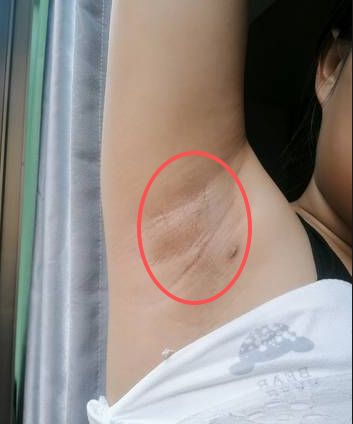
You’re in the shower, running a soapy hand over your skin, when you feel it—a small, tender bump under your arm. Your mind, conditioned by years of health headlines, immediately goes to one place: lymph nodes. And while that’s a perfectly reasonable first thought, the body’s story is often more nuanced. That lump under your arm might not be a swollen lymph node at all; it could be a far more common, and usually less sinister, visitor: a cyst or an infected sweat gland.
Before you let worry set in, let’s explore the other characters in this underarm drama. It’s a crowded neighborhood under there, with hair follicles, sweat glands, and, yes, lymph nodes all living in close quarters. Knowing who’s who can bring immense peace of mind.
The Usual Suspects When It’s Not a Lymph Node
- The Clogged Pore: Hidradenitis Suppurativa
Think of this as a next-level ingrown hair or a severe form of acne that occurs in areas where skin rubs against skin. It happens when hair follicles become blocked and inflamed. What starts as a small, tender, pea-sized lump can quickly turn into a painful, boil-like abscess. These lumps often rupture, draining pus, and can recur in the same general area. If you’re getting repeated, painful bumps in your armpits or groin, this could be the culprit. - The Infected Sweat Gland: A Boil (Furuncle)
Your armpit is home to a high concentration of apocrine sweat glands. Sometimes, bacteria (most commonly Staph) can invade a small cut from shaving or a clogged gland, leading to a deep, painful infection that forms a core of pus. This is a boil. It will often come to a head, looking like a large, red, and very tender pimple. - The Sebaceous Cyst
These are slow-growing, benign lumps that form under the skin when sebaceous (oil-producing) glands become blocked. They feel like a small, round ball, often firm but slightly movable. The key characteristic? They often have a tiny, visible central pore that can sometimes be squeezed (though you shouldn’t!), and they are usually not tender unless they become infected. - A Simple Ingrown Hair (Folliculitis)
The most common offender of all. After shaving or waxing, a hair can curl back and grow into the skin, causing a small, red, and often pus-filled, painful bump. It’s essentially a minor infection and inflammation of the hair follicle.
So, How Can You Tell the Difference? Playing Detective
While only a doctor can give you a definitive diagnosis, you can look for a few clues:
- The Tenderness Test:Is it painful to the touch? Lymph nodes that swell due to common infections (like a cold) are oftentender. However, a painful, red, and hot lump is the classic sign of an abscess or boil. A sebaceous cyst is usually painless unless infected.
- The Movability Factor:Gently try to move it. A benign cyst or a swollen lymph node is often somewhat mobile. A fixed, rock-hard lump that doesn’t move at all is more concerning and warrants a prompt doctor’s visit.
- The “Head” of the Matter:Does it look like it’s coming to a point, with a white or yellow center? That’s a classic sign of a boil or a severe ingrown hair. Lymph nodes and cysts don’t typically present with a visible “head.”
- The Timeline:Did it appear suddenly and painfully over a day or two? That points strongly toward an infection (boil or folliculitis). Has it been there for weeks or months, slowly growing without pain? That leans more toward a cyst.
But… When It Is a Lymph Node: Listening to the Signal
Of course, sometimes it is a lymph node. Your armpits are rich with them, and they are part of your body’s elite defense network. They swell when they’re on high alert, fighting an infection or illness.
You should be more concerned about a lymph node if the swelling is:
- Persistent,lasting for more than two to four weeks without any sign of going down.
- Progressively growinglarger.
- Firm or hardand feels fixed in place, like it’s stuck to the underlying tissue.
- Accompanied by other systemic symptomslike unexplained weight loss, drenching night sweats, or a persistent fever.
In these cases, the lymph node isn’t the problem; it’s the messenger. It’s reporting on a more significant event happening elsewhere in the body, and that’s a signal you must heed.
Your Action Plan: From Observation to Doctor’s Visit
- Don’t Panic, But Do Pay Attention.For a new, tender lump, give it a few days. Apply a warm compress several times a day. It might just be a minor infection that resolves on its own.
- Practice Tender Loving Care.Avoid shaving over it and use gentle, fragrance-free soaps. Do not squeeze or try to “pop” it, as this can push the infection deeper.
- Know When to Call the Doctor.Make an appointment if:
- The lump is getting larger or more painful.
- It doesn’t improve after a week or two.
- It’s hard, fixed, and not tender.
- You have any of the systemic symptoms mentioned above.
- Simply put, if it’s causing you anxiety, that’s reason enough to get it checked.
Your doctor can usually diagnose the issue with a simple physical exam. Sometimes, an ultrasound might be used to get a better look.
That lump under your arm is a mystery, but it’s one you can solve. By understanding the cast of characters, you can move from fear to informed observation. It’s your body’s way of starting a conversation. Your job is simply to listen and know when it’s time to call in a translator.