Daniel Whitman had always admired confidence. At sixty-five, the retired history professor had spent decades analyzing behavior, studying social dynamics, and observing how people interacted. He assumed freedom came from choice, opportunity, or circumstance. But then he noticed something he hadn’t fully understood: the unique liberation many women seemed to experience after sixty.
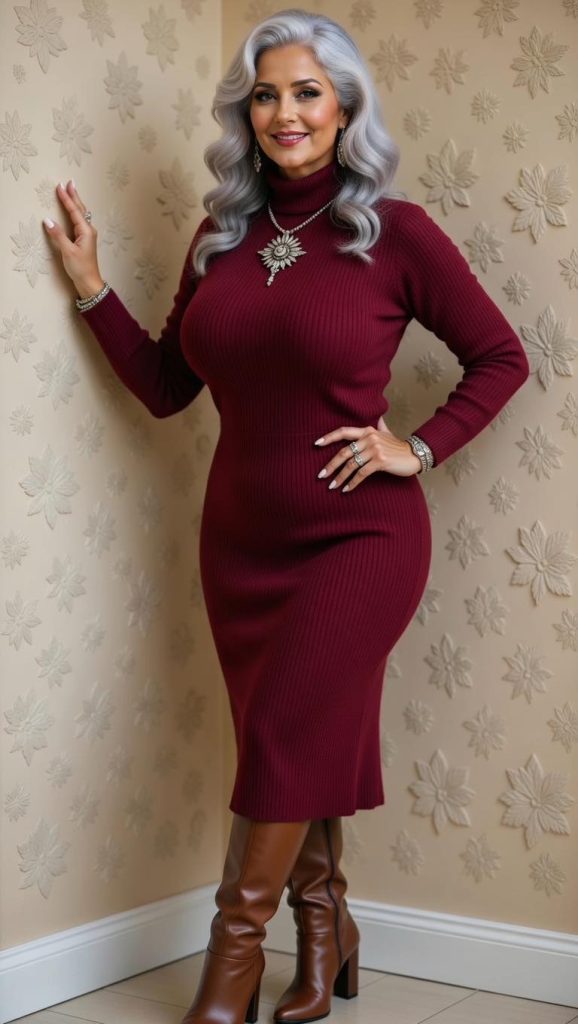
He first saw it in Vivienne Clarke at a local poetry reading. She was sixty-two, a retired journalist with a lifetime of stories etched into the corners of her eyes. Her silver hair fell loosely around her shoulders, and she moved through the small, crowded room with an ease that suggested she didn’t need permission to exist. People noticed her presence, but she didn’t perform for it.
Vivienne laughed easily at the poems, nodded thoughtfully during discussions, and even offered sharp, insightful observations without dominating the conversation. Daniel observed how she interacted with others—fully present, unhurried, and unselfconscious. She wasn’t chasing attention, trying to impress, or measuring herself against anyone else.
After the reading, Daniel introduced himself.
“You have a remarkable way of being here,” he said, unsure how else to describe it.
Vivienne smiled, tilting her head slightly. “I’ve learned that being here fully is enough. You don’t need to perform for anyone after a while.”
He frowned. “After a while?”
“After decades of trying to fit expectations—society’s, family’s, even our own—we realize the masks aren’t necessary anymore. You stop asking permission to enjoy life. You stop measuring yourself by someone else’s standard. That freedom… it’s intoxicating.”
Daniel nodded slowly, realizing he’d never thought of it that way. “So it’s experience that makes it possible?”
“Partly,” she replied. “Experience teaches you what matters. Age teaches you which rules to follow—and which to discard. Many women feel freer not because life suddenly gives them space, but because they finally take it for themselves.”
Over the next few weeks, Daniel observed the same pattern in other women he met through book clubs, local events, and friends’ gatherings. They laughed more freely, spoke more honestly, and acted with a quiet decisiveness that he had rarely seen in younger years. Their movements were unhurried, their words intentional. They didn’t seek approval—they expected none.
One afternoon, Daniel and Vivienne took a long walk along the lake. The late autumn sun reflected in the water, creating a calm, golden shimmer.
“You seem… completely at ease with yourself,” Daniel said.
Vivienne laughed softly. “It’s a learned skill. You survive losses, heartbreaks, changes, and triumphs. You grow into a self you finally trust. And at sixty, that trust becomes liberation.”
Daniel realized something profound: the freedom women felt after sixty wasn’t about circumstances. It wasn’t about being younger or having fewer responsibilities. It was about knowing themselves, embracing who they were, and finally refusing to let others dictate their worth or choices.
As they paused on a bench overlooking the lake, Vivienne reached out and lightly touched his arm—a simple, deliberate gesture. It wasn’t flirtation, but it conveyed the ease and presence she had cultivated.
Daniel understood in that instant: freedom after sixty wasn’t loud. It wasn’t about rebellion. It was quiet, confident, and unshakeable. It was the result of knowing who you are, what you want, and that life—finally—belongs to you.
And women who reach that stage… radiate it, quietly, irresistibly, and without apology.