Martin Caldwell had spent years thinking confidence was something you built in youth—through charm, beauty, or ambition. At sixty, the retired lawyer had accumulated experience, accolades, and stories, yet he had never truly grasped the kind of confidence that emerged in women later in life.
He first noticed it in Eleanor Sutton at a charity auction for the local arts council. Eleanor, sixty-four, moved through the room with a quiet self-assurance that immediately drew his attention. Her silver-streaked hair framed a face lined with experience, but her eyes were sharp, curious, and unflinching. She didn’t dominate the conversation, nor did she seek to impress—it was as if her presence alone set a subtle standard.
During a brief moment near the wine table, Martin tried his usual small talk. “Quite a turnout tonight, isn’t it?”
Eleanor gave a small, knowing smile. “Yes, but numbers don’t impress me. It’s the quality of the people—and the conversations—that matter.”
He paused. “You speak as if you’ve seen a lot of these events.”
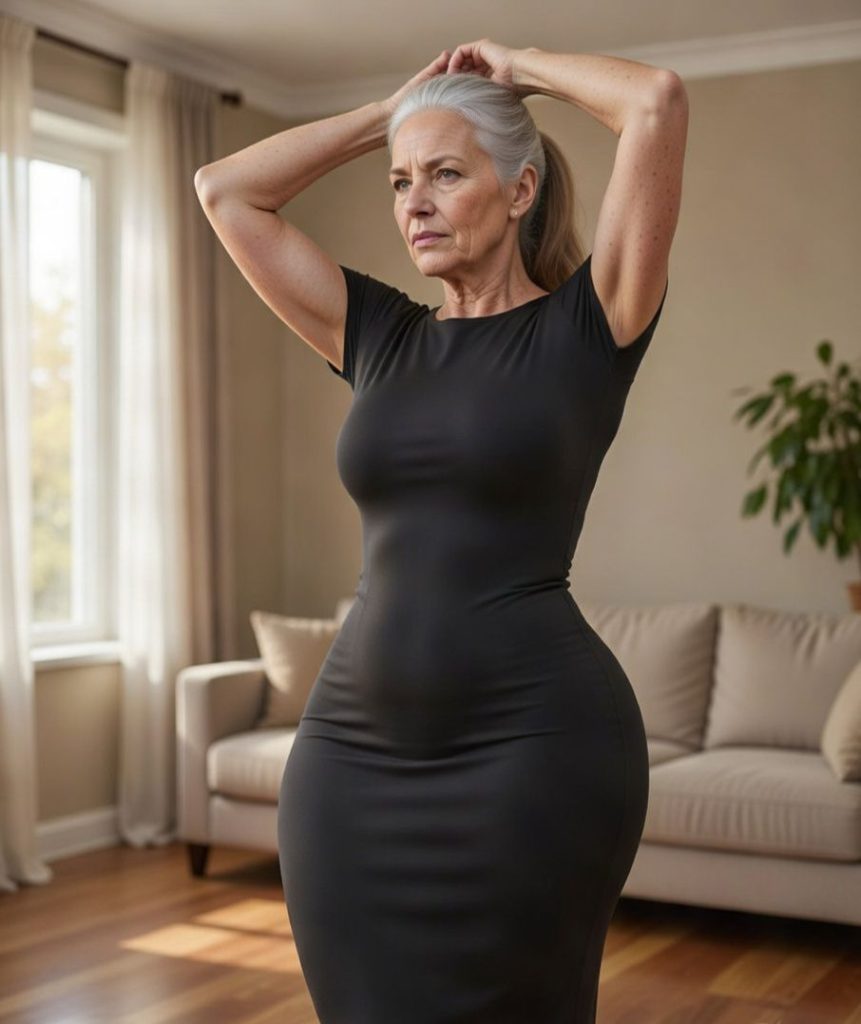
“I have,” she said lightly. “I’ve also learned what’s worth my attention. Life teaches you priorities, and with them comes confidence. You stop worrying about being liked by everyone. You start focusing on what feels right for you.”
Over the next few weeks, Martin kept encountering Eleanor at local gatherings—book readings, lectures, and even the Saturday farmers’ market. Each time, he noticed the same pattern: she listened attentively, spoke deliberately, and never overexplained herself. She engaged fully, but without needing to compete for recognition or approval.
One afternoon, while sharing a quiet walk along a shaded park path, Martin asked, “How did you get to be so… self-assured?”
Eleanor glanced at him, a faint smile playing at her lips. “Experience, mistakes, heartbreaks, successes… all of it. But mostly, it’s realizing that your value isn’t defined by others’ opinions. After a certain age, you stop performing. You stop apologizing for existing. That clarity… gives confidence you can’t fake.”
Martin watched her hands brush lightly against a wrought-iron fence as they walked. There was no pretense in her movements—only a grounded, deliberate ease. He realized that this kind of confidence wasn’t loud or attention-seeking; it was subtle, magnetic, and undeniable.
“Most men,” she continued, “expect women to seek validation or chase approval. But many of us, later in life, simply choose not to. That’s why you notice it—the calm certainty, the quiet authority that doesn’t need to be proven.”
Martin nodded slowly, understanding in a way he hadn’t before. He had spent so long chasing visible signs of attraction or trying to impress others, he had missed the understated, profound confidence that came with lived experience.
As they reached the park exit, Eleanor paused and looked back at him with a soft, deliberate gaze. It wasn’t flirtation—it was acknowledgment, recognition, and a gentle invitation into a world shaped by self-possession.
Martin walked away feeling both humbled and enlightened. The surprising confidence many women gain later in life wasn’t about daring gestures or attention-grabbing antics. It was quieter, steadier, and far more compelling—rooted in the deep knowledge of who they were and the freedom to embrace it without apology.
And in that quiet certainty, Martin realized, lay a power that few ever truly notice, but everyone inevitably feels.